

Speed alone doesn’t make an urgent freight delivery reliable. Effective time-sensitive delivery solutions combine clear deadlines with shipment tracking, expedited transport and handling suited to the freight. When a shipment is critical, avoidable handoffs and delays can put schedules at risk.
It’s understandable to focus on how quickly a shipment can move. But efficiency also depends on visibility, timely communication and a plan for handling exceptions. The delivery team needs to know where the freight is, which milestones matter and how to respond if the schedule changes.
This article explains how tracking and milestone updates can support timely intervention, when expedited freight makes sense, and how handling requirements affect delivery planning. It also covers how service-level agreements define expectations for timing and communication. These elements work together to make urgent deliveries more predictable, whether you’re moving business freight, healthcare supplies or a critical part.
Key Takeaways
- Set delivery milestones and appointment expectations so delays can be identified early and communicated clearly.
- Choose expedited freight when the shipment’s deadline calls for faster movement than standard shipping can provide.
- Match handling and monitoring procedures to the shipment’s sensitivity, especially for healthcare and pharmaceutical goods.
- Use a service-level agreement to define delivery targets, updates and how exceptions are managed.
- For urgent shipments, Sameday Express offers time critical shipment, same-day delivery, Sameday Direct Drive and rush delivery options.
Appointment and transit milestone tracking
A delivery appointment is more than a calendar entry; it helps teams coordinate when a shipment is expected. A shipment arriving after a receiving window may have to wait for another available slot. For example, a manufacturer expecting a replacement component needs the pickup time, planned arrival and receiving contact aligned. Recording these milestones gives dispatchers and receivers a shared view of progress and expectations.
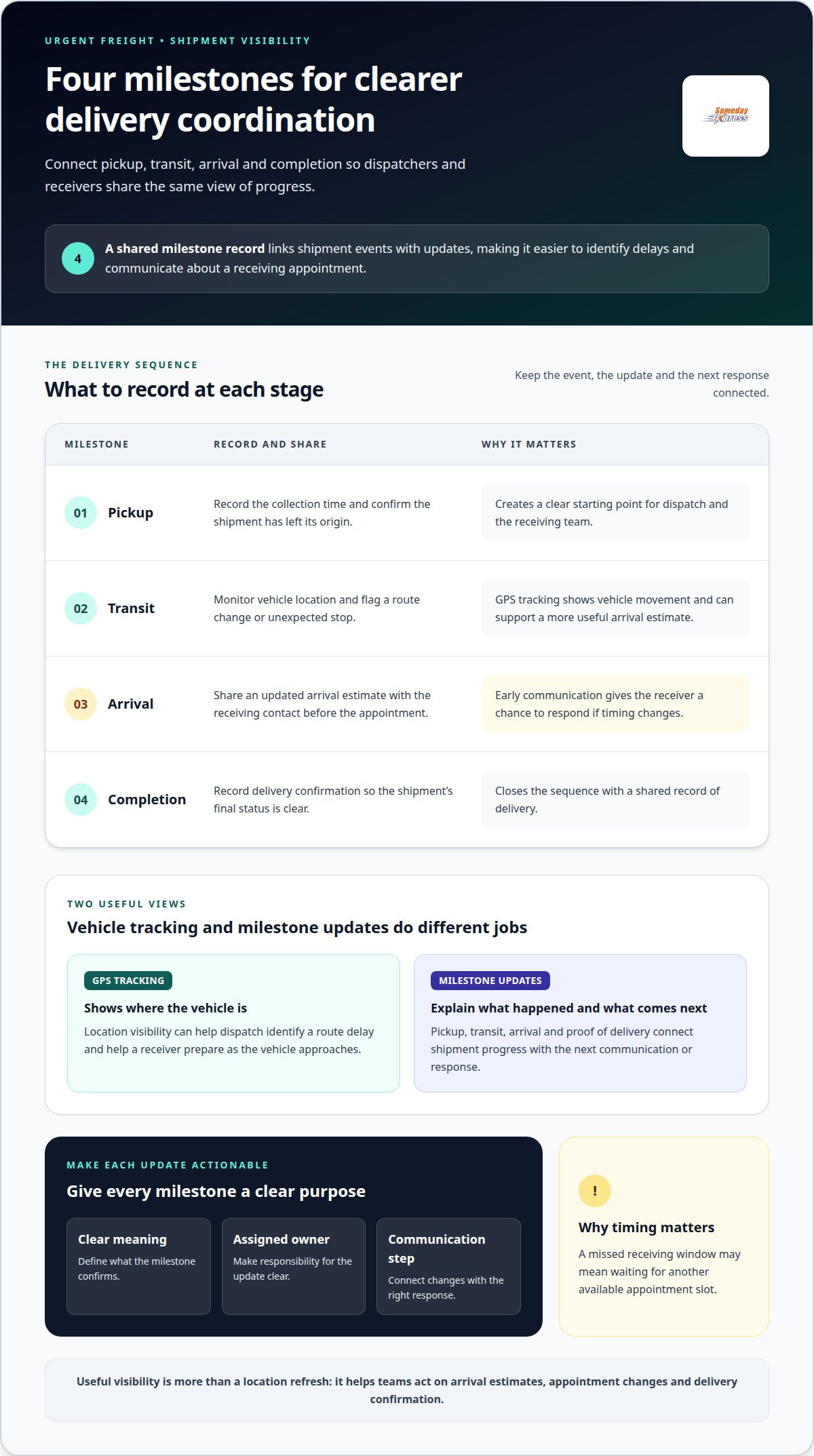
Manual check-in calls can leave gaps between updates. A dispatcher may hear that a shipment has left its origin while the receiver still lacks an arrival estimate. Siloed planning tools create another problem: appointment details may be separate from route notes or customer communications. A single milestone record connects pickup, transit, arrival and proof of delivery, so teams can act on the same shipment information.
Real-time tracking adds visibility between milestones. Rather than waiting for a driver to call, a logistics team can review the shipment’s current status and share relevant updates. If a vehicle is delayed near a receiving dock, the team can notify the receiver and discuss the appointment. Early communication can prevent a missed window from turning into an unplanned wait.
GPS tracking shows a vehicle’s location during transport and can support a more useful arrival estimate than a departure notice alone. A receiver can prepare a loading area as the vehicle approaches, while dispatch can identify a route delay. GPS visibility describes vehicle movement; milestone updates explain what has happened and what action comes next.
Set milestones around the shipment’s actual handoffs and appointments. A practical sequence can include:
- Pickup: Record collection time and confirm the shipment has left its origin.
- Transit: Monitor location and flag a route change or unexpected stop.
- Arrival: Share an updated estimate with the receiving contact before the appointment.
- Completion: Record delivery confirmation so the shipment’s final status is clear.
Automation can keep records consistent. A tracking system may generate status updates when a vehicle reaches a planned location or a milestone changes. Staff can then focus on exceptions, such as a missed appointment, rather than repeatedly requesting routine updates. Automation works best when each milestone has a clear meaning, an assigned owner and a communication step.
For urgent freight, the useful measure is not simply how often tracking refreshes. Teams need information that supports a decision. A location update matters when it changes an arrival estimate; an appointment alert matters when someone can still respond. Connect tracking, monitoring and receiver communication to each delivery milestone. That process makes shipment visibility practical, helps manage expectations and gives teams a clearer basis for responding to disruption.
Expedited freight shipping definition and delivery time
Expedited freight moves a shipment faster than standard service, with transit planned around a tighter deadline. The delivery window depends on distance, transport mode, pickup timing and required handling.
Expedited Freight Transit Times
Expedited freight shipping usually takes between one and three days. That range is a planning guide, not a universal schedule for every Canadian route. Compare the stated transit window with the shipment’s deadline, collection time and delivery location.
For example, a production line waiting for a replacement component may need a direct route rather than a shipment routed through several terminals. A freight provider can assess the load, origin, destination and deadline, then match them with a suitable vehicle or service. Sensitive freight may also require handling that affects the route and timing.
Guaranteed Pickup and Delivery
A time-definite commitment identifies when a shipment will be collected or delivered. Confirm whether it covers pickup, arrival or both, and how completion is recorded. A delivery appointment, receiving hours and accurate site details help make the schedule workable.
Ground freight can still face weather, traffic accidents or driver shortages. Fixed routes and congested hubs may also disrupt planned transit. Read a guarantee as a defined service commitment, not as a promise that every operational disruption disappears. For a shipment tied to a production deadline, align the delivery window with the receiver’s ability to unload it.
Courier, Air Freight, and Dedicated Vehicles
A delivery provider can help choose among courier, air freight and dedicated vehicle service by weighing the shipment’s size, route, deadline and handling needs. Courier service suits smaller consignments; air freight can move freight quickly between airports, while a dedicated vehicle carries the shipment by road without combining it with other loads.
Canadian couriers offer time-definite or guaranteed delivery through specific service options, but commitments depend on the route and service terms. Compare the stated pickup and arrival windows, not just the service label.
Third-party logistics (3PL) partners can help select capacity for a particular shipment. Depending on the freight and delivery plan, options may include a drop trailer, full truckload or less-than-truckload service. Receiver feedback and dock-appointment performance can reveal where a ground strategy is failing. Repeated late arrivals, last-minute capacity requests or frequent carrier changes can point to a mismatch between the route and operational needs.
On-demand capacity can suit a deadline that cannot wait for a scheduled consolidated route. Before dispatch, the provider needs usable shipment dimensions, pickup and delivery addresses, receiving hours, contact details and any handling instructions. These details help the provider plan transportation around the actual delivery requirement, rather than relying on a general transit estimate. For an urgent shipment, explore urgent delivery options suited to its route and deadline.
Healthcare and pharmaceutical logistics
Healthcare logistics must account for delivery urgency, handling needs and the receiving site’s workflow. To arrange an urgent delivery in Canada, provide the shipment’s contents, pickup and delivery addresses, deadline, contacts and handling instructions.
For lab samples, test kits, biological materials or medication, these details help the delivery team plan the route and handoffs. A hospital receiving supplies, for example, may need delivery to a specific department rather than a general receiving area. Clear instructions reduce confusion at collection and delivery.
Cut-off times also affect the workflow. If a carrier collects orders every two days, the internal cut-off should be at least 12 hours before collection to avoid delays. That planning window gives staff time to prepare the shipment, complete paperwork and make it ready for pickup. A later order may require a different delivery arrangement.
Time-Critical Logistics Challenges
Healthcare shipments can lose value when a missed handoff, delayed paperwork or unsuitable handling disrupts the planned route. A laboratory sample arriving after the receiving team’s processing window, for example, may not meet its intended purpose. Temperature-sensitive medication also needs handling suited to its requirements. Planning should account for every handoff, the receiving schedule and special instructions.
Compliance matters for healthcare and food products, while chain-of-custody records document responsibility during transit. A logistics plan should identify who releases the shipment, who receives it and how each transfer is recorded. If an unexpected delay occurs, clear contacts and records help teams respond with less confusion.
Urgent Delivery Arrangements
An urgent delivery starts with the deadline and essential shipment details. The provider uses the pickup and delivery locations, contents, size, handling needs, ready time and recipient availability to plan transportation. For example, a pharmacy shipment may need a specific receiving contact and delivery window. Accurate details help match the plan to the actual requirement.
Next, the delivery team coordinates collection, transit and receipt with the sender and destination. If a disruption changes the route or arrival estimate, direct communication helps the receiving site prepare. For healthcare shipments, the handoff process should also preserve required records and handling instructions.
E-commerce operations face a different pressure point: orders may arrive throughout the day, while collection follows a set schedule. Flexible logistics can help manage urgent orders without disrupting routine fulfillment. For example, a time-critical order needed sooner than the regular dispatch can be planned separately according to its destination, readiness and deadline.
Forecasting, dock scheduling and exception management help identify weak points before they affect an urgent shipment. A business can review when orders are ready, how receiving appointments are arranged and what happens after a missed collection. These steps turn healthcare logistics and e-commerce fulfillment into practical decisions: prepare shipments on time, communicate handling needs and coordinate each delivery with the receiving operation.
Delivery timelines and service-level agreements
Delivery options depend on the deadline, route, freight type and receiving arrangements. Carriers may have more scheduled connections in Canadian cities; rural delivery planning depends more on distance, local coverage and available transport.
A service-level agreement (SLA) turns delivery expectations into operational terms. It can define the pickup window, arrival deadline, tracking updates, handling requirements and response process for disruptions. For a temperature-sensitive shipment, for example, the agreement should identify the required handling and who is responsible for communicating a delay.
For critical business-to-business shipments, an SLA can also set out agreed service remedies, such as credits or penalties, if terms are missed. Clear definitions matter: specify whether the commitment covers collection, delivery or both, and how each milestone is recorded. This reduces disputes about what “on time” means.
Transport choices address different points in the supply chain:
- On Board Courier: A courier accompanies a shipment as a passenger, which can suit small, highly urgent consignments. Plan around passenger travel, handoff and destination access.
- Charter services: A chartered aircraft is arranged for a specific shipment or route. The plan depends on aircraft suitability, airport access and onward delivery from the arrival point.
- Dedicated delivery: A vehicle is assigned to one shipment rather than carrying freight for multiple customers. This can reduce transfer points and keep pickup and delivery planning direct.
- First Flight Out: The shipment is booked on an early available flight. Airport cut-offs, flight schedules and ground transportation at both ends shape the total delivery timeline.
- Ground expedite: A vehicle moves the freight by road on an urgent schedule. Route distance, traffic, weather and receiving hours affect the plan.
Each option suits a different deadline and shipment profile. An aviation part needed at an airport, for instance, may require careful coordination between flight arrival and the final road leg. A shipment moving between nearby cities may suit direct ground transportation. Match the mode to the complete door-to-door timeline, not just its fastest segment.
Ask the provider to define service coverage for the exact origin and destination. A dense urban route and a remote delivery point can involve different carrier connections, collection windows and final-mile arrangements. Compare transport time, specialized handling, tracking, flexibility and premium service terms. A workable SLA ties those details to named contacts, clear milestones and a process for notifying the receiver when plans change.
Preferred handling and shipment monitoring
Handling plans should reflect the shipment’s contents, condition requirements and destination. A carton of routine office supplies needs different controls from temperature-sensitive medication or a laboratory sample. For sensitive shipments, agree on the required handling, responsible contacts and delivery records before collection. These details help the carrier plan suitable routes and keep the shipment’s purpose clear throughout transit.
Urgent delivery restrictions depend on the shipment’s contents and how it must travel. Pharmaceuticals, dangerous goods and temperature-sensitive items may have specific handling, documentation, packaging or carrier-acceptance requirements. The provider needs accurate product details and instructions to assess the shipment against applicable Canadian requirements and the chosen transport mode.
For medical shipments, the handoff process matters as much as movement between locations. A pharmacy sending temperature-sensitive medication, for example, should provide handling instructions and recipient details. Chain-of-custody records document who handled the shipment at each transfer. Clear records also help resolve questions about where a delay occurred or when the destination received the goods.
Before dispatch, a shipment audit can catch information gaps that might disrupt delivery. A logistics team can review:
- Shipment identity: Confirm the contents and any special handling instructions.
- Destination details: Match the delivery address with the receiving contact and access instructions.
- Transit plan: Check that planned routes and handoffs suit the shipment’s requirements.
- Records: Prepare the documents and transfer details needed for the shipment.
- Exceptions: Identify who receives updates if the delivery plan changes.
Audits are especially useful when a shipment has high value or a narrow delivery window. For example, a replacement component needed to restore equipment may warrant priority over routine replenishment. Prioritization should reflect business impact, deadline, shipment sensitivity and the consequences of delay. Recording the reason for priority helps dispatch teams make consistent decisions across competing orders.
Monitoring should track more than location. For a temperature-sensitive load, the team needs to know whether the required handling remains part of the plan, who is responsible at each handoff and whether the receiver can accept delivery. A timestamped pickup, transfer and receipt record provides a practical audit trail. If the route changes, staff can review the shipment’s status and coordinate with the destination.
Clear instructions make special handling actionable. Include the shipment description, relevant condition requirements, pickup readiness, delivery deadline and receiving contact in the dispatch information. For a sensitive shipment requiring coordinated handling and monitoring, arrange an urgent delivery with these details ready.
Sameday Express Inc.: time critical shipment
Sameday Express helps businesses arrange a time-sensitive shipment when freight needs a faster, deadline-focused plan. Options include Same Day Delivery, Direct Drive delivery and Rush delivery. These services can suit urgent business freight, such as a replacement part needed at a worksite or supplies required at a receiving location.
Share the shipment’s origin, destination, ready time, deadline and handling requirements. These details help shape a delivery plan around the actual need. For urgent freight, request a quote from Sameday Express.
Plan the next urgent shipment with confidence
Before the next urgent order is ready, decide who can approve a dispatch change and how your team will share updated instructions. A clear internal handoff keeps urgent freight visible alongside routine orders. Keep the shipment purpose, destination and receiving contact together so planning can start with the details that matter.
Choose a delivery plan that fits the shipment’s urgency and your business operations. Share the pickup and destination details, required delivery window and any handling needs with the delivery team. Clear information gives everyone involved a practical starting point.
For help planning an urgent shipment, request a quote from Sameday Express. An organized handoff can help your team move the next delivery forward with greater control.
Frequently Asked Questions
What are the best strategies for making time-sensitive deliveries more efficient?
Separate urgent freight from routine orders and assign one person to approve dispatch changes. For example, if a shipment is ready later than planned, that person can decide whether to release it immediately or use the next scheduled collection. Keep the recipient’s contact and site-access instructions with the shipment record. A driver arriving at a locked entrance can lose valuable time, even when the route runs smoothly.
Why is last-mile delivery crucial for time-sensitive materials?
Last-mile delivery connects the shipment’s arrival point to the person or operation that needs it. A hospital supply delivered to the wrong entrance, for example, may not reach the right department in time for use. Confirming the receiving location, access instructions and recipient availability helps prevent handoff delays. For urgent materials, delivery is complete only when the shipment reaches its intended recipient.
What are time-sensitive delivery solutions?
A time-sensitive delivery solution is a transport plan built around a shipment’s required arrival window. Its value depends on reaching the recipient when the goods are needed, rather than following a routine schedule. For example, a business sending contract documents for a deadline may choose a faster courier service than standard shipping. The right service depends on the deadline, shipment size, route and handling needs.
What types of same-day and expedited delivery services are available in Canada?
Canadian businesses can choose among options such as Same Day Delivery, Next Day Delivery, Overnight Delivery, Direct Drive delivery, Rush Delivery and Next Flight Out. Each serves a different timing need. A road-based direct drive can suit a shipment requiring dedicated transport, while an air-linked option may suit urgent longer-distance movement. Sameday Express Inc. offers same-day delivery, Sameday Direct Drive and rush delivery for urgent shipments.
What risks affect time-sensitive deliveries, and how can delays or missed deadlines be managed?
Traffic, severe weather, missed collection windows, incorrect addresses and unavailable receivers can disrupt an urgent delivery. Reduce confusion by keeping dispatch and receiving contacts current and giving the carrier clear access instructions. Businesses can also establish an escalation process: notify the recipient when plans change, agree on an alternate receiving contact, and decide who can approve a revised appointment or next step.
Disclaimer
Blog Disclaimer
The information published on the Sameday Express Blog is provided for general informational and educational purposes only. While we strive to keep all content accurate and up to date, Sameday Express makes no representations or warranties of any kind, express or implied, regarding the completeness, accuracy, reliability, suitability, or availability of the information contained in our articles.
The content on this blog does not constitute legal, customs, tax, regulatory, financial, or professional advice. Shipping regulations, carrier policies, customs requirements, and transportation laws may change without notice and may vary by destination. Readers should verify current requirements with the appropriate government authorities, carriers, or qualified professionals before making shipping or business decisions.
Sameday Express is not liable for any loss, damage, delays, or consequences arising from the use of, or reliance on, information published on this website. Any actions taken based on the information provided are at the reader's own risk.
References to third-party companies, products, services, or websites are provided for informational purposes only and do not constitute an endorsement or recommendation by Sameday Express.
All blog content, including text, graphics, images, and logos, is the property of Sameday Express unless otherwise stated and may not be reproduced or distributed without prior written permission.
For specific shipping requirements, pricing, transit times, or logistics solutions, please contact Sameday Express directly for personalized assistance.


