

A tractor-trailer isn’t always the practical choice for regional freight. A straight truck delivery service can move commercial goods, such as retail products, packaged goods and industrial materials, between regional destinations. Its cab and cargo area sit on one chassis, making it a distinct option when the shipment needs a truck suited to local delivery access.
Choosing a vehicle is only one part of planning a reliable shipment. Freight size, delivery access and handling needs all matter, especially when a receiving site has limited access or no loading dock. This guide explains what straight trucks carry, when they suit regional shipping and how they compare with cargo vans and tractor-trailers.
You’ll also learn how delivery requirements and accessorial services can shape a shipment plan, what to consider when arranging regional freight in Canada, and where service is available. The aim is to help you identify the right fit for your load and understand the next steps for arranging delivery.
Key Takeaways
- Learn how a straight truck’s single chassis and enclosed cargo area can suit regional freight and delivery locations with limited access.
- Identify how distance, freight type and delivery complexity shape a shipment plan, including potential accessorial needs.
- See how to plan facility deliveries around loading access, receiving requirements and storefront traffic.
- Understand which commercial goods commonly travel by straight truck and which loads may need specialized handling or equipment.
- Compare straight trucks with cargo vans and tractor-trailers to choose a vehicle that fits your shipment’s size and destination.
Straight truck delivery for mid-mile and regional shipping
A straight truck has its cab and cargo area attached to one chassis. This layout suits regional routes where freight travels by road and delivery access matters. For a Canadian shipment, match the vehicle and shipping method to the load, receiving location and required arrival date.
For a move between a distribution point and a regional destination, a straight truck can carry palletized or boxed commercial freight. Its enclosed cargo area protects goods from the weather, while a hydraulic liftgate can help unload at a site without a loading dock. Give the driver clear delivery instructions, including the receiving entrance and unloading area.
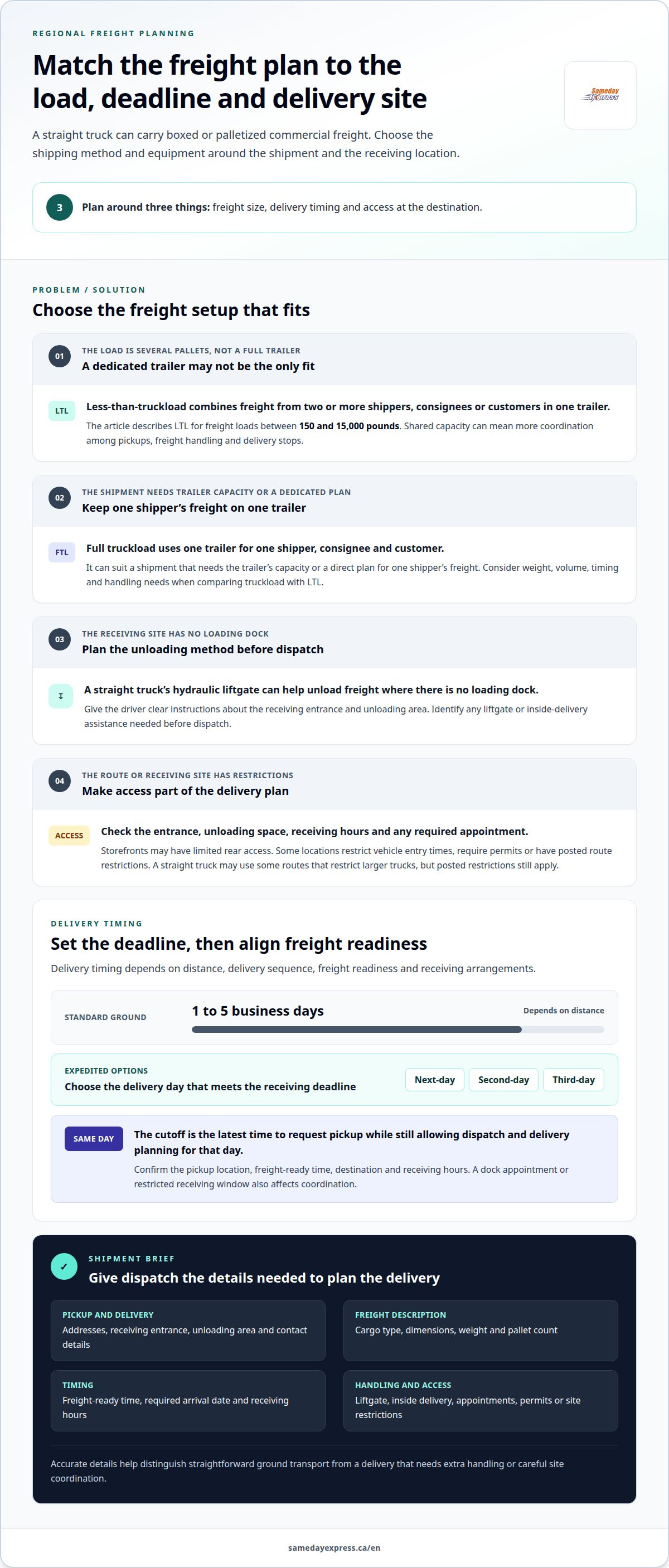
Less-than-truckload, or LTL, shipping combines freight from two or more shippers, consignees, or customers in one trailer. LTL is described as serving freight loads between 150 and 15,000 pounds. This option can suit a business with several pallets that don’t fill a trailer. Shared capacity can require coordination among pickups, freight handling, and delivery stops.
Full truckload, or FTL, uses one trailer for one shipper, consignee, and customer. It can fit a shipment that needs the trailer’s capacity or a direct plan for one shipper’s freight. The choice between truckload and LTL depends on the shipment’s weight, volume, timing, and handling needs. A few pallets headed to one receiving point may fit LTL; a larger dedicated shipment may call for FTL.
Same-day cutoffs and expedited options
A same-day cutoff is the latest time to request a pickup while still allowing dispatch and delivery planning for that day. First, set the pickup location, freight-ready time, destination and receiving hours. These details help determine whether the load can move that day. For a time-critical regional shipment, same-day delivery can reduce the wait between pickup and arrival.
Expedited options may include next-day, second-day or third-day delivery. Choose an option that meets the receiving deadline, then align freight readiness and destination access with the delivery date. A dock appointment or restricted receiving window also affects coordination.
Standard and expedited shipping times
Standard ground shipping usually takes 1 to 5 business days, depending on distance from the shipper. A regional route’s length and delivery sequence shape the schedule. For example, freight moving between a warehouse and a nearby business can follow a different plan from a load travelling across several provinces.
Next-day, second-day and third-day delivery are expedited options. Compare the delivery date with when the freight will be ready, then account for receiving hours and unloading arrangements. Clear details help keep the shipment moving efficiently from pickup to final delivery.
Delivery pricing and accessorial charges
A regional freight quote reflects more than the distance between pickup and delivery. Freight type, fuel costs, route length and delivery complexity all affect the service plan. A pallet delivered to a business dock, for example, has different handling needs from several pieces delivered inside a retail location. Share accurate shipment details so the quote reflects the work required at both ends.
Accessorial services cover requirements beyond basic pickup and delivery. A liftgate may be needed when the destination has no loading dock. Driver assistance might include moving freight inside a building or to a specific delivery area. Describe these needs before dispatch, as they affect the work involved and are not routine unloading.
Site access matters, too. A retail storefront with limited rear access may require delivery through a front or side entrance, affecting unloading space, pedestrian access and time at the stop. For a residential delivery, identify the driveway, entrance, stairs and receiving area. A straight truck may be able to use some routes that restrict larger trucks, but drivers must still follow posted restrictions.
Some locations also restrict when vehicles may enter. Residential areas may have posted route restrictions, while particular sites may require permits or specific access windows. Oversized loads and hazardous-material shipments can involve additional route or access requirements. Include the cargo type, dimensions and destination in the delivery plan so relevant requirements can be considered before dispatch.
Before accepting a quote, prepare a concise shipment brief. Include pickup and delivery addresses, freight description, dimensions, weight, pallet count, ready time and receiving hours. Then list any equipment or assistance needed, such as a liftgate or inside delivery. This helps distinguish standard ground transport from a delivery requiring extra handling or restricted access, and gives dispatch a clear plan.
Fuel and distance influence the route component, while freight type and handling needs shape the rest. A long regional route with straightforward dock access differs from a shorter stop requiring careful coordination at a busy storefront. Keep the receiving contact available and provide clear unloading instructions. For urgent freight, review regional delivery options alongside the shipment’s access requirements before arranging pickup.
Distribution facilities and service coverage
Before booking regional freight, map the pickup, any distribution facility and the final delivery point. For a shipment moving between a warehouse and a retail branch elsewhere in Canada, confirm service for both addresses. Check each stop individually, since national coverage does not mean every route has identical arrangements. Pickup and destination postal codes help define the route and identify facility requirements.
Before choosing a straight truck delivery company, check that its service area covers every stop and that its vehicle suits the freight and receiving site. Ask how shipment tracking works, how dispatch communicates updates and what handling is available for sensitive or perishable goods.
Distribution facilities can serve as pickup points, receiving hubs or transfer locations. Coordinate every stop: the freight must be ready, the correct dock or entrance must be available, and the receiver must know when to expect the truck. A warehouse receiving pallets needs clear dock instructions, while a retail destination may need an arrival plan that avoids customer traffic.
Clarify how the carrier network works across the route. One carrier may move freight from origin to destination, or several carriers and facilities may be involved. Each handoff adds a coordination point. For time-sensitive freight, identify who manages dispatch, provides tracking updates and records delivery completion. A named contact at each facility helps keep communication clear during a transfer.
For service across Canada, define coverage using the actual pickup and delivery addresses rather than relying on a general description. Provide both postal codes, facility names, receiving hours and any appointment requirements. A route between distribution centres may need different scheduling from a delivery to a retail branch. Clear location details help dispatch plan for the full journey and the receiver’s operating hours.
Facility capabilities also affect the plan. A distribution centre with a loading dock handles freight differently from a site with ground-level access or no unloading equipment. Provide freight dimensions, pallet count and unloading instructions before dispatch. If the shipment needs a liftgate, include that in the shipment details and make sure the receiving area has room to unload.
For perishable freight, identify the required temperature conditions and expected handling at each facility. For sensitive goods, document who will receive the freight and what delivery confirmation is needed. These instructions help coordinate equipment, route timing and handoffs across a national network. Keep a contact available at pickup and delivery so drivers can resolve access questions without disrupting the planned route.
What goods can and cannot be transported by straight truck?
Straight trucks commonly carry commercial freight that fits within the vehicle’s cargo area and handling limits. Examples include retail products, packaged goods, industrial materials, food-grade products and construction supplies. A dry van can protect clothing, electronics, non-perishable food and boxed materials from the weather during transport.
For businesses, the key question is whether the load suits the truck’s capacity, configuration and delivery conditions. Boxed electronics for a retailer, for example, may travel as standard dry freight. Palletized supplies for a manufacturer may also fit, provided the goods can be loaded, secured and unloaded at both locations.
Fragile cargo can travel by straight truck when its packaging and loading plan protect it from movement and contact. A pallet of boxed glassware, for example, needs stable placement and suitable protective packaging. Share the item type, dimensions, weight and handling instructions before dispatch. These details help determine whether the cargo can be loaded safely and whether the receiving site can unload it.
Temperature-sensitive goods need a different assessment. Frozen, chilled and refrigerated freight requires temperature-controlled transport suited to the required conditions. Some temperature-controlled straight trucks have separate zones for frozen, chilled and dry goods on one trip. A standard dry van cannot replace temperature control, so identify the product’s handling needs before choosing equipment.
Some loads may not suit a straight truck as configured. Freight that exceeds its cargo dimensions or weight capacity needs another transport plan. For heavy industrial equipment or complete facility moves that require specialized rigging and transport, specialists like Silver Knight Haulage & Machineries Ltd handle full factory plant relocations. Oversized items can also require permits; hazardous-material transportation may require permits in Vancouver. These examples show why cargo type, dimensions, route, and local requirements matter. They do not create one universal list of goods that every straight truck can or cannot carry.
Before booking, prepare a clear freight profile:
- Describe each product, such as packaged food, electronics, or industrial parts.
- Provide the shipment’s dimensions, total weight, and number of pallets or pieces.
- Identify fragile, perishable, frozen, chilled, or refrigerated goods.
- Explain any special loading, securing, or unloading requirements.
- State whether the destination has a loading dock or needs ground-level unloading.
These details help match freight with a suitable truck and delivery plan. Dry construction materials have different equipment needs from refrigerated food or delicate retail stock. If the load needs temperature control, has unusual dimensions or requires specialized handling, make that central to planning. Clear information at pickup helps prevent a mismatch between the goods and the vehicle assigned.
How does straight truck delivery compare with cargo vans and tractor-trailers?
Choose a vehicle by matching its cargo space and access to your freight and destination. A cargo van suits smaller loads, such as cartons for a local retailer or urgent parts for a repair site. A straight truck handles larger commercial shipments, while a tractor-trailer is built for freight requiring a larger trailer. The right fit depends on load size, delivery access and route requirements.
They can suit palletized freight or a large quantity of smaller items that would not fit a cargo van. Most straight trucks stand 10 to 13 feet tall, so check overhead clearance at parking entrances, loading areas, and delivery sites before dispatch.
A straight truck’s cab and cargo area share one chassis. This can make it easier to reach sites where a larger tractor-trailer has limited access. Smaller trucks may reach more locations with fewer permit requirements, but posted route restrictions still matter. Confirm the permitted vehicle route before sending freight to a delivery point on a restricted street.
A cargo van is generally practical for compact shipments that need less cargo space, such as a small replacement part, or smaller relocations where services like Fool Movers manage loads under 12 m³. A straight truck is a better match for multiple pallets or bulky commercial goods. A tractor-trailer makes sense when the shipment needs a larger trailer or is part of a dedicated truckload movement.
Compare the options against these shipment details:
- Freight volume: A few cartons may fit a cargo van; several pallets may call for a straight truck.
- Load weight: Match the shipment weight to vehicle capacity, including packaging and pallets.
- Site access: Check street restrictions, overhead clearance, turning space, and dock access.
- Unloading: Identify whether the receiver has a loading dock or needs a liftgate.
- Route plan: Consider whether the destination suits a smaller vehicle or a tractor-trailer.
These checks help avoid choosing a vehicle that cannot reach the site or handle the freight. Retail stock may fit a straight truck, for example, but a low-clearance entrance can affect the route. A cargo van may reach a tight delivery area, yet lack the space for the load. Compare the vehicle’s dimensions and capacity with both the freight and the final stop.
For urgent freight, choose the smallest vehicle that safely accommodates the shipment and destination. Explore urgent delivery options when timing is as important as vehicle fit.
Sameday Express Inc.: same day delivery
Sameday Express offers Same Day Delivery and Rush delivery for businesses with urgent shipments. When a shipment needs a direct route, Direct-drive delivery is another option for moving freight between pickup and destination.
Choose a service based on the pickup location, destination, shipment readiness and required arrival time. A time-critical business shipment may suit Same Day Delivery, while freight that needs direct transport may fit Direct-drive delivery. Share the shipment details and deadline when arranging service so the delivery plan reflects the job.
For help selecting an option for your shipment, contact Sameday Express Inc.
Prepare your next freight move
Turn your delivery requirements into a clear dispatch brief before arranging pickup. Set the required arrival time, identify the person receiving the freight and make sure the shipment will be ready when the driver arrives. A straight truck delivery service is easier to plan when the pickup, destination and handling instructions are clear from the start.
For your next shipment, gather the details needed for a practical route and delivery plan: freight description, dimensions, weight, pickup and delivery addresses, receiving hours and access instructions. If the deadline changes, update the delivery contact promptly so everyone can coordinate around the same plan.
When your freight is ready to move, contact Sameday Express Inc. about delivery to discuss the shipment and its timing. A clear brief gives your team a focused starting point and helps move the next step forward with confidence.
Frequently Asked Questions
Do you have after-hours and weekend delivery options?
Yes. Sameday Express Inc. provides 24/7 delivery availability, with advance notice for direct same-day service. This supports urgent requests outside regular business hours, including weekend needs. Share the shipment’s ready time, pickup and delivery locations, and deadline when arranging service. For a time-critical delivery, clear details help the team plan the route and coordinate the handoff with the receiver.
What is a straight truck delivery service?
A straight truck delivery service moves freight in a vehicle with the cab and cargo area built on one chassis. Unlike a tractor-trailer, it doesn’t use a separate trailer. Businesses can use this vehicle for commercial deliveries that need more cargo space than a van provides, while still reaching some locations with tighter access. The shipment’s weight, dimensions and unloading needs help determine whether it’s a suitable fit.
What types and sizes of straight trucks are available for delivery in Canada?
Straight trucks range from smaller box trucks to larger regional delivery vehicles. Common box-truck dimensions include 12-16 feet long, 94 inches wide, and 70 inches high; larger straight trucks can measure 22-26 feet long, 96 inches wide, and 96 inches high. Match dimensions and capacity to the freight and site access.
How much does straight truck delivery cost in Canada?
Delivery pricing is quoted according to the shipment and service requested. The route, freight details, timing and special handling or access needs shape the quote. Provide accurate pickup and delivery information, shipment dimensions and weight to support a useful estimate. Sameday Express handles quote requests through its online Request a Quote form, where you can submit your delivery details.
What factors affect straight truck delivery pricing?
Pricing can depend on distance, freight type, fuel costs, delivery complexity and required handling. A direct business-to-business drop, for example, differs from a delivery requiring a liftgate or inside placement. Shipment weight, dimensions, pickup readiness and receiver hours can also affect planning. When requesting a quote, include these details alongside the route so the service requirements are clear.
How do I book a straight truck delivery service?
Prepare the pickup and delivery addresses, shipment description, dimensions, weight, ready time and required arrival time. Add unloading details, such as dock access or liftgate needs, and identify a contact at each location. Then submit the information through Sameday Express’s online Request a Quote form. Once the shipment plan is arranged, keep the receiving contact available for delivery coordination.
What licensing and insurance requirements apply to straight truck delivery in Canada?
Applicable commercial-vehicle credentials and insurance depend on the vehicle, operating area and freight being carried. Requirements can differ across provincial and federal operations, so they should match the carrier’s routes and shipment type. For Sameday Express shipments, all shipments are fully covered end-to-end. Request the relevant shipment documentation and confirm that the service details align with your business’s transport requirements.
How long does straight truck delivery take, and what delivery options are available?
Standard ground shipping usually takes 1 to 5 business days, depending on distance from the shipper. Expedited options include following-day, second-day, and third-day delivery. Sameday Express Inc. also offers same-day and next-day delivery options. The route, freight-ready time, pickup arrangements, and receiving hours all affect the plan. Provide your required arrival date when arranging delivery so the option can be matched to the deadline.
Disclaimer
Blog Disclaimer
The information published on the Sameday Express Blog is provided for general informational and educational purposes only. While we strive to keep all content accurate and up to date, Sameday Express makes no representations or warranties of any kind, express or implied, regarding the completeness, accuracy, reliability, suitability, or availability of the information contained in our articles.
The content on this blog does not constitute legal, customs, tax, regulatory, financial, or professional advice. Shipping regulations, carrier policies, customs requirements, and transportation laws may change without notice and may vary by destination. Readers should verify current requirements with the appropriate government authorities, carriers, or qualified professionals before making shipping or business decisions.
Sameday Express is not liable for any loss, damage, delays, or consequences arising from the use of, or reliance on, information published on this website. Any actions taken based on the information provided are at the reader's own risk.
References to third-party companies, products, services, or websites are provided for informational purposes only and do not constitute an endorsement or recommendation by Sameday Express.
All blog content, including text, graphics, images, and logos, is the property of Sameday Express unless otherwise stated and may not be reproduced or distributed without prior written permission.
For specific shipping requirements, pricing, transit times, or logistics solutions, please contact Sameday Express directly for personalized assistance.


