

Canadian weather can put shipments at risk at both ends of the thermometer. Shipping temperature sensitive goods safely means keeping each product within its required temperature range from pickup to delivery. A refrigerated vehicle alone may not be enough if the route, transfer points or waiting periods expose the shipment to changing conditions.
Packaging and cooling equipment matter, but so does the entire delivery plan. Routes, handoffs, transfer areas and refrigeration all affect temperature control, while Canadian heat and cold can change the risks in transit. The product’s required range should guide preparation. Temperature monitoring and GPS tracking provide different information, and both can help teams plan and respond before and during transit.
Key Takeaways
- Start with the product’s required temperature range, then align packaging and transport plans with that limit.
- Plan routes and delivery timing to reduce exposure to weather, waiting periods and avoidable handoffs.
- Prepare transfer areas and receiving locations so goods can move promptly into suitable conditions.
- Use temperature monitoring to assess product conditions in transit; location tracking alone can’t show whether the required range was maintained.
- Adapt insulation and cooling or heating measures to the shipment’s sensitivity and Canada’s seasonal extremes.
1. What Is Temperature-Sensitive Shipping?
Temperature-sensitive shipping protects products that can spoil, lose effectiveness or suffer damage outside their required temperature range. That range depends on the product, not on a universal setting for every shipment. Pharmaceuticals, food and biological materials, for example, may each need different handling. Packaging, transit conditions and monitoring must work together to protect the goods until delivery.
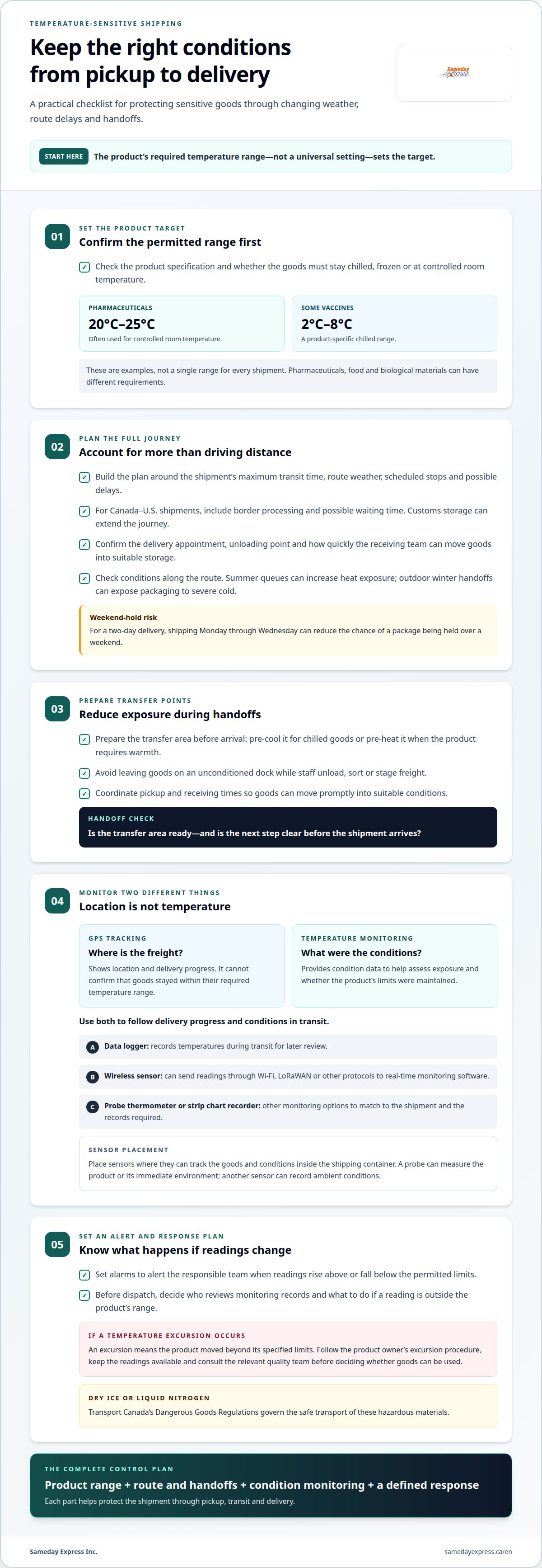
What temperature ranges are used for shipping temperature-sensitive goods? There is no single range: pharmaceutical controlled room temperature is often 20°C to 25°C, while some vaccines require 2°C to 8°C. The product’s specified range determines the target, including whether it must remain chilled, frozen or at controlled room temperature.
Choose monitoring equipment to suit the shipment and the records required. Options include data loggers, wireless sensors, probe thermometers and strip chart recorders. A data logger records temperatures during transit for later review. Wireless sensors can send readings through Wi-Fi, LoRaWAN or other protocols to real-time monitoring software.
Place sensors where they can track both the goods and conditions inside the shipping container. For example, a probe can measure a product or its immediate environment, while another sensor records ambient conditions. Set alarms to alert the responsible team if readings rise above or fall below the shipment’s permitted limits.
Shipment visibility covers two things: location and temperature. GPS tracking shows where freight is and how it is progressing, but it cannot confirm that the goods stayed within their required temperature range. Temperature sensors provide condition data. Used together, these tools help teams monitor delivery progress and exposure during transit.
Before dispatch, decide who will review monitoring records and what to do if a reading falls outside the permitted range. A temperature excursion occurs when a product moves beyond its specified limits. If one happens, follow the product owner’s excursion procedure and consult the relevant quality team before deciding whether the goods can be used. Keep the readings available for assessment.
Pharmaceutical shipments often require detailed temperature monitoring and documentation throughout transit. These records help teams assess whether handling conditions stayed within the product’s requirements. A sensor alarm should prompt a defined response, such as reviewing readings and following the excursion procedure, rather than assuming the product remains usable. For shipments using dry ice or liquid nitrogen, Transport Canada’s Dangerous Goods Regulations govern the safe transport of these hazardous materials.
2. Route planning, delivery appointments and border delays
A temperature-controlled route must account for more than driving distance. Plan around the shipment’s maximum transit time, expected weather, scheduled stops and possible border waits. EUR-Lex recommends accounting for external temperature extremes and possible storage during customs transit. A route that looks direct on a map can still expose perishable freight to delays at a crossing or receiving dock.
Plan the route around the product’s tolerance and delivery appointment. Confirm when the receiving site can accept the shipment, where unloading should take place, and how quickly staff can move the goods into suitable storage. A missed appointment can extend time in a vehicle or at a dock. In winter, an outdoor handoff can expose packaging to severe cold. In summer, a queue can increase heat exposure.
For Canada-US shipments, include border processing and possible waiting time in the maximum transit estimate. Don’t plan around the shortest driving time alone. Customs storage may extend the journey, so account for the full route, not just time on the road. Temperature controls need to remain effective at every stage, including planned stops and time spent waiting for processing.
Delivery timing affects exposure, too. Expedited or overnight transport can reduce the time a temperature-sensitive package spends in transit. For a two-day delivery, shipping Monday through Wednesday can reduce the chance of a package being held over a weekend. Sending early in the week and avoiding weekends or holidays can also limit the risk of freight sitting at a facility.
Local ice cream delivery without dry ice still needs a controlled plan. Ice cream is vulnerable to temperature changes, so insulated packaging and a short, direct route can help protect it. Schedule pickup close to the receiving appointment, limit unnecessary stops, and arrange prompt transfer indoors. Insulation slows heat transfer, but transit time and outdoor exposure still need careful management.
Before dispatch, map the pickup, route, border crossing if applicable, delivery appointment and receiving point. Consider the forecast along the route, not just conditions at pickup. Temperature monitoring provides information about conditions in transit, while route updates help teams respond to delays. A practical logistics plan connects these details to clear actions, such as notifying the receiving site if arrival timing changes.
For urgent shipments, time-critical delivery planning can help align pickup and arrival with the required delivery window. Choose a schedule that accounts for product limits, weather, waiting time and the receiving site’s readiness.
3. Pre-cooling or pre-heating transfer areas
A temperature-controlled handoff can fail if goods leave controlled storage for an unconditioned dock. During a transfer, outside heat or cold can reach the container while staff unload, sort or stage the freight. Prepare the transfer area before the shipment arrives. Pre-cool it for chilled goods or pre-heat it when the product requires warmth. This helps reduce exposure between storage and transportation.
Use a clear handoff sequence. First, set the transfer area to the conditions the product requires. Next, place the receiving container and route equipment nearby. Move the shipment directly from storage into the prepared area, then onward to the vehicle or next storage point. For example, a carton of chilled lab samples should not wait beside an open loading bay while staff look for a suitable container.
Temperature-controlled warehouses and distribution centres should be pre-cooled or pre-warmed for the goods they handle. A cold room used for refrigerated freight is not automatically suitable for frozen goods or products requiring controlled room temperature. Match the space to the product’s specified range, and keep insulated packaging closed during movement. If freight must wait at an unrefrigerated dock, arrange a temperature-regulated staging area instead.
Cold-chain transport generally means maintaining chilled or frozen conditions during storage and movement. Cool-chain handling focuses on keeping products cool within their required limits, rather than letting outdoor conditions determine their temperature. The practical distinction comes down to the product’s range and the equipment used at each handoff. A refrigerated container, prepared warehouse and planned transfer can support continuity. An uncontrolled gap between them can expose goods to a sudden change.
When choosing a transportation partner, examine operational controls as well as the vehicle. Assess security protocols, temperature-monitoring systems, equipment testing and on-time delivery performance. For high-value or regulated freight, include relevant certifications in the assessment. Ask how the shipment moves through each transfer point, who handles it, and how delays are managed. These details matter when several facilities or transportation partners share responsibility for one cold chain.
Before dispatch, map every handoff from origin storage to the receiving site. Identify where freight could wait, which area needs pre-cooling or pre-heating, and who moves the containers at each step. Temperature mapping records variations within a storage area or container, helping assess whether conditions are consistent. Use those records to identify warm or cold spots and improve placement before the next shipment.
4. Refrigerated shipping for food and pharmaceuticals
Refrigerated shipping matches the product’s required range with suitable equipment, packaging and storage. Food and pharmaceutical shipments don’t share one universal setting. Meat, eggs, dairy and frozen products each need product-specific conditions. Some frozen foods require temperatures of −18°C or colder. Confirm the manufacturer’s or product owner’s specified range before dispatch, then plan the vehicle and packaging around it.
Active refrigerated shipping uses electrical or battery power to regulate the temperature inside the shipment. It can suit freight that needs ongoing temperature adjustment during transit. Passive packaging relies on insulation and refrigerants, such as gel packs or phase change materials, to slow temperature changes without powered regulation. The right choice depends on the product’s range, route, expected transit time and exposure conditions.
Packaging preparation matters in either method. Precondition temperature-controlled packaging to the required temperature before loading; adding cold packs to a warm container won’t instantly bring the contents to their target. For example, gel packs can provide a cooling buffer, while dry ice supports shipments requiring sub-zero conditions. Dry ice is solid carbon dioxide at −78.5°C. Liquid nitrogen can maintain temperatures of −195.8°C for sensitive biological materials.
Cold storage must continue through pickup, loading and delivery. Keep shipments in suitable storage before dispatch, and coordinate refrigerated docks or a temperature-regulated staging area. A refrigerated vehicle can’t prevent exposure while goods wait at an unrefrigerated dock. Prepare a suitable area for any planned wait, then move the freight promptly into the next controlled environment.
When loading refrigerated trucks and trailers, avoid blocking airflow. Restricted circulation can create uneven conditions within a load, even when the refrigeration equipment is running. Temperature-controlled trailers also have less interior space than standard trailers because of their additional wall insulation. Plan the cargo layout and available capacity before loading bulky containers or mixed product categories.
Food shipments in Canada require attention to applicable transportation and temperature-control obligations. The Canadian Food Inspection Agency’s preventive control requirements are relevant to food handling and transport. Keep product instructions and shipment records aligned, and ensure the receiving facility can move perishable goods into suitable storage as soon as they arrive.
Pharmaceutical freight needs product-specific handling and records. Good Distribution Practice guidelines address suitable storage, transport and handling conditions for pharmaceutical products. A shipment plan should connect the required range with packaging preparation, transport equipment and receiving arrangements. If dry ice or liquid nitrogen is used, include its specific handling and packaging needs in the transport plan.
5. Protecting goods from extreme Canadian temperatures
How do seasonal weather and delivery delays affect temperature-sensitive shipping in Canada? Heat can warm packaging, while winter cold can chill freight during loading or a delayed handoff. The longer the exposure, the more time outside conditions have to affect the product. Match insulation and cooling measures to its required temperature range and the route’s expected conditions.
Prepare for the weather at pickup, along the route and at delivery. A shipment leaving a climate-controlled building may encounter a hot loading area, followed by cooler conditions in transit. In winter, a vehicle queue or exposed dock can bring cold air against the package. Use insulated packaging suited to the product’s size, sensitivity and journey, and keep it closed during transfers.
Packaging materials offer different forms of protection. Thermal liners, foam and vacuum-sealed panels reduce heat transfer between freight and its surroundings. Expanded polystyrene (EPS) and rigid polyurethane are also used as insulating materials. Choose a container that fits the goods. Excess empty space can make it harder to position cooling materials effectively around the product.
Gel packs can help protect goods from heat, including skincare products and supplements. A phase change material absorbs or releases heat at specific temperatures, helping stabilize conditions over time. Choose a material that suits the shipment’s required range, then pack it according to the product’s needs. For frozen freight, use materials and packaging designed for the specified frozen range rather than assuming one setup suits every item.
Some products face risks beyond warming or chilling. Cosmetics and skincare can melt, separate or have a shorter shelf life after exposure to unsuitable conditions. CBD products may lose potency if overheated. Ripening fruit generates heat, which can raise the temperature inside a standard trailer and affect other goods in the load. Separate cargo with different temperature needs and avoid blocking airflow.
Plan for delays by considering how long the shipment may be outside controlled storage. Use leak-proof bags or boxes if cooling agents could create moisture, and add absorbent material when moisture could threaten packaging integrity. Keep the receiving area ready so goods can move indoors promptly after arrival. Let seasonal conditions and current forecasts inform the packaging and shipment schedule.
For urgent deliveries, arrange same-day delivery to reduce transit time. Pair a suitable delivery window with packaging prepared for the product’s temperature range and expected weather exposure.
Sameday Express Inc.
Sameday Express Inc. can help coordinate urgent shipments when timing and a direct route matter. For temperature-sensitive freight, a shorter journey can reduce transit time, while the product’s packaging and required temperature range remain essential to its protection. Choose same-day delivery or rush delivery when the shipment’s schedule calls for faster movement. Sameday Direct drive and Montreal to Toronto direct drive are options for shipments that need direct transportation between those locations.
Share the pickup and delivery locations, required arrival window, and any handling details that affect the shipment. This helps align the delivery plan with your timing needs. Contact Sameday Express Inc. to discuss your shipment and the delivery option that fits.
Set up the next shipment for a clear handoff
A practical plan for shipping temperature sensitive goods starts with one clear decision: who is responsible for the shipment at each handoff? Record the responsible contact, arrival window, product handling instructions and what to do if delivery timing changes. This gives dispatch, transport and receiving teams the same information to work from, rather than relying on separate messages.
Before the next shipment, turn that information into a concise handoff brief. Include the destination’s receiving contact and any product-specific instructions that affect acceptance. Keep the brief with the shipment details so teams can act quickly when plans change. Clear ownership helps prevent a missed update from becoming a gap in coordination.
If you’re preparing an urgent delivery, discuss your shipment plan with Sameday Express Inc. A clear starting point helps the team understand the route and timing you need. Take the next step with a focused plan for your shipment.
Frequently Asked Questions
What Is Temperature-Sensitive Shipping?
It is the planned movement of products that can be damaged or lose effectiveness outside their required temperature range. The product determines the target: some pharmaceuticals need controlled room temperature, while frozen foods need colder conditions. For example, a shipment containing both chilled medicine and frozen goods may need separate packaging and handling plans. Consider the full journey, including loading, vehicle transit and receiving, not just the vehicle’s temperature.
How do you ship temperature-controlled items?
Start with the product’s required range and instructions, then match the packaging, coolant and transport to the route. Prepare the packaging before loading and protect the item at every handoff. For example, temperature-sensitive lab samples may need insulated containers and a planned delivery directly to a receiving team. Share handling instructions with everyone involved, and keep a record of shipment conditions and delivery events.
How do you choose insulated packaging and refrigerants for shipping temperature-sensitive goods?
Choose packaging according to the product’s temperature range, size, sensitivity and expected transit conditions. Insulation slows heat transfer; gel packs or phase change materials can provide cooling when suited to the required range. Frozen shipments may need a different setup from chilled products. Pack the item so coolant surrounds the protected space without damaging the contents, and use leak-proof packaging if condensation or coolant leakage could affect product integrity.
How long can gel packs, dry ice, and other coolants maintain safe temperatures in transit?
There is no reliable duration that applies to every shipment. Hold time depends on the type and quantity of coolant, packaging insulation, starting conditions, outside weather and route delays. A small insulated parcel on a short route differs from a larger container travelling through several transfer points. Use temperature monitoring to assess actual shipment conditions, and plan for the longest expected transit period rather than relying only on the scheduled arrival time.
Which Canadian couriers offer refrigerated or temperature-controlled shipping?
Service capabilities vary, so match the courier service to the shipment’s requirements. Sameday Express offers temperature-controlled transport for bioscience and medical shipments, including lab samples, test kits and biological materials. For urgent consignments, its Same Day Delivery service provides direct, non-stop transport. The shipment still needs suitable packaging and clear product instructions. Provide the required temperature range and handling details when arranging transport so the delivery plan reflects the cargo.
What Canadian regulations apply to shipping food, pharmaceuticals, and other temperature-sensitive goods?
Requirements depend on the product and shipment. For food in Canada, consider the Canadian Food Inspection Agency’s preventive control requirements for applicable transportation and temperature controls. Pharmaceutical shipments need conditions suited to the product and supporting records. Transport Canada’s Dangerous Goods Regulations govern the safe transport of hazardous materials, including dry ice and liquid nitrogen. Identify the product and any refrigerants before dispatch, as each can affect handling and documentation.
How do you ship goods internationally while maintaining temperature control and customs compliance?
For a Canada-US shipment, plan for customs processing as part of the total transit time, not as an afterthought. Prepare accurate shipment and product details, match packaging to the route’s expected conditions, and account for possible waiting or storage during border transit. Dry ice and liquid nitrogen also require appropriate dangerous-goods handling under Transport Canada’s rules. Temperature protection must remain effective while customs procedures are completed.
What temperature-monitoring devices and data loggers should be used during shipment?
Common options include data loggers, wireless sensors, probe thermometers and strip chart recorders. A data logger records conditions for later review; wireless sensors can send readings to monitoring software. Choose a device that captures the information needed for the shipment, and position it to reflect conditions near the goods. Set alerts for readings outside the permitted range, and decide who reviews alarms and shipment records.
Disclaimer
Blog Disclaimer
The information published on the Sameday Express Blog is provided for general informational and educational purposes only. While we strive to keep all content accurate and up to date, Sameday Express makes no representations or warranties of any kind, express or implied, regarding the completeness, accuracy, reliability, suitability, or availability of the information contained in our articles.
The content on this blog does not constitute legal, customs, tax, regulatory, financial, or professional advice. Shipping regulations, carrier policies, customs requirements, and transportation laws may change without notice and may vary by destination. Readers should verify current requirements with the appropriate government authorities, carriers, or qualified professionals before making shipping or business decisions.
Sameday Express is not liable for any loss, damage, delays, or consequences arising from the use of, or reliance on, information published on this website. Any actions taken based on the information provided are at the reader's own risk.
References to third-party companies, products, services, or websites are provided for informational purposes only and do not constitute an endorsement or recommendation by Sameday Express.
All blog content, including text, graphics, images, and logos, is the property of Sameday Express unless otherwise stated and may not be reproduced or distributed without prior written permission.
For specific shipping requirements, pricing, transit times, or logistics solutions, please contact Sameday Express directly for personalized assistance.


