

Urgent delivery for healthcare providers moves time-critical medical items, including lab samples, test kits, biological materials and supplies, from pickup to destination on the same day. Priority dispatch coordinates collection and routing, while direct transport keeps the shipment moving to the receiving facility. It supports healthcare logistics when routine delivery timing is too slow.
For hospitals, laboratories, clinics and other healthcare organizations, the priority is clear: deliver the right item to the right location promptly, with a carefully managed handoff. This article explains how urgent same-day medical deliveries work, who they serve and how couriers coordinate collection and delivery. It also shows where time-critical courier services fit when medical materials or supplies need to move between healthcare locations across Canada.
Key Takeaways
- Learn which time-sensitive medical items may need priority transport, from lab samples and medication to supplies and documents.
- See how a collection and direct-delivery route can keep an urgent shipment moving between healthcare locations.
- Identify the healthcare facilities and organizations that can benefit from time-critical courier coordination.
- Understand how dispatch tools can support courier assignment, route planning, shipment visibility and delivery records.
- Explore why handling requirements depend on the type of specimen or supply and the rules that apply to its transport.
What Are Urgent Same-Day Medical Deliveries?
Urgent same-day medical delivery takes a healthcare item to its specified destination on the day it is collected. A clinic might need a lab sample delivered in time for analysis or a document sent before an appointment.
Time-Sensitive Medical Items
Time-sensitive medical items include specimens, medication, documents and supplies whose arrival affects a healthcare task. A lab sample may be needed for scheduled testing, while a pharmacy may need medication delivered to support care. Hospital supplies and patient records can also require prompt transport between facilities.
Medically necessary insured health services are different from courier services. Under the Canada Health Act, provincial and territorial public health insurance plans cover medically necessary hospital, physician and certain surgical-dental services. Transport moves items that support care; it does not make a service insured. Private duty nursing, for example, is an uninsured health service.
White-glove delivery describes attentive handling and a planned handoff for medical equipment. A clinic receiving diagnostic equipment, for instance, may need it delivered to a named department and handed to an identified recipient instead of being left at general reception. Clear instructions help prevent misplaced equipment from disrupting a scheduled appointment.
Medical Courier Services and Software
An urgent same-day medical courier service collects a time-critical shipment and transports it directly to its intended healthcare destination. This can support movement between a hospital, laboratory, clinic, or pharmacy when routine schedules don’t meet the required timing.
Medical courier software is a digital system for managing delivery orders, dispatch, tracking and status updates for medical items. It can assign work to a suitable nearby courier, help plan a route and show shipment progress with estimated arrival times. Digital timestamps and signatures can document delivery, while alerts keep senders and recipients informed.
For a specimen going to a laboratory, these tools can connect the collection request with courier assignment and delivery updates. They support coordination but do not replace the receiving facility’s intake or testing process.
Medical Couriers Compared With General Delivery
Medical couriers focus on healthcare shipments and their handling needs, while general same-day delivery moves a broader range of goods. The distinction matters when a shipment contains a lab sample, medication or confidential document.
A general parcel may need only a delivery address, while a specimen may require packaging instructions and a clearly identified recipient. A medical delivery record can also document who received an item and when, helping maintain a traceable chain of custody.
Neither label alone means every shipment can be handled the same way. The item, sender’s instructions and destination’s receiving process determine the appropriate transport plan.
Transport Requirements and Provider Risks
Packaging, temperature control and chain-of-custody requirements depend on the item and its handling instructions. A temperature-sensitive medication, for example, may need different controls from a paper document. In fleet logistics, maintaining strict environmental conditions often relies on tailored cargo setups, with vehicle conversion specialists like Auto Industries Factory illustrating how commercial vans are adapted for specialized transit. The sender should provide relevant handling details, and the receiving location should be ready for the handoff.
Potential risks include delay, damage, misdelivery or a temperature excursion that affects a shipment. Healthcare providers should consider whether their insurance coverage addresses the shipment’s value and these transport risks, and understand any applicable policy limits, exclusions and documentation requirements.
For equipment, naming a department and recipient can clarify the final handoff. For specimens, delivery records and custody details help show the shipment’s path from collection to receipt. These details support dependable healthcare logistics without assuming that every item has identical requirements.
Collection and direct delivery
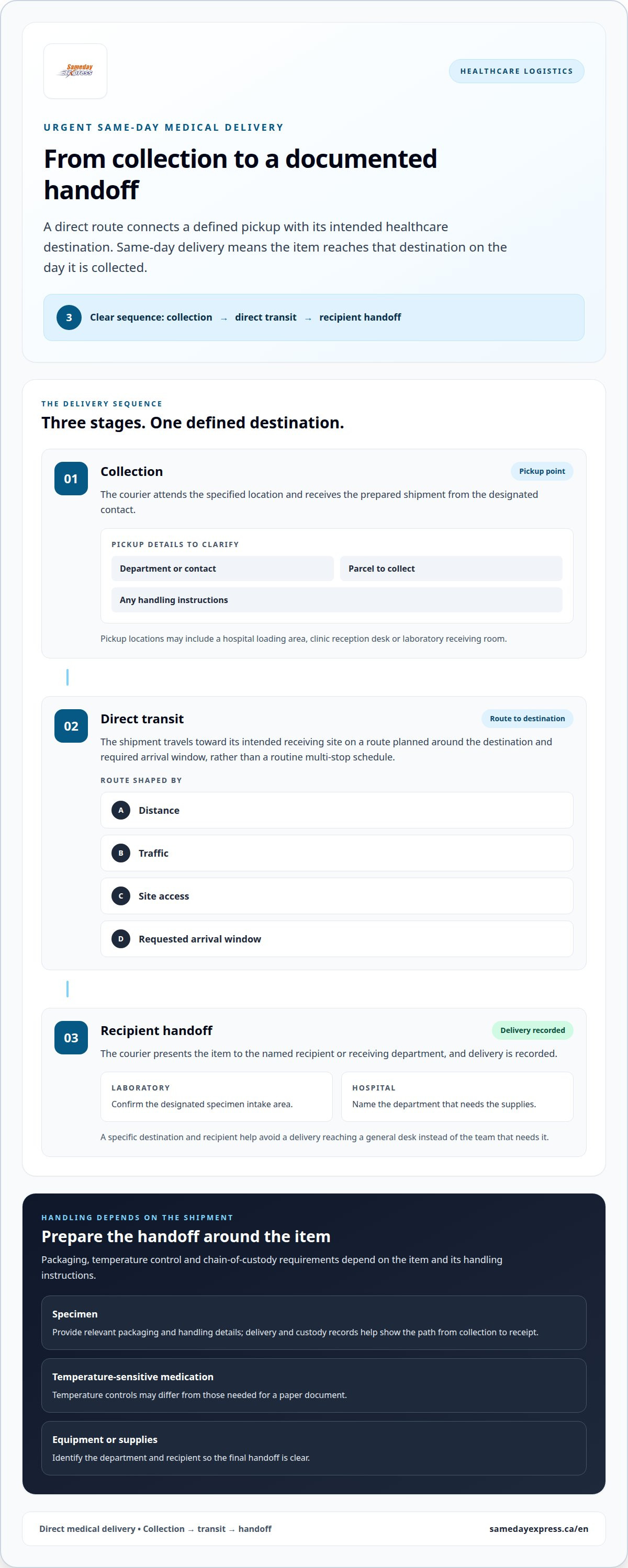
A direct medical delivery connects a defined pickup location with the intended destination. The route is planned around the shipment’s destination and required arrival window, rather than a routine multi-stop schedule. For a clinic sending diagnostic material to a laboratory, clear pickup and receiving details help create a straightforward handoff.
Collection begins when the shipment is ready at the agreed location. Pickup details should identify the department or contact, the parcel to collect and any handling instructions. A hospital loading area, clinic reception desk or laboratory receiving room may each require different access directions. Accurate information helps avoid delays spent looking for the right person or entrance.
Direct delivery then connects pickup with the named destination. The practical sequence is:
- Collection: The courier attends the specified location and receives the prepared shipment from the designated contact.
- Transit: The shipment travels toward the receiving site, with the route shaped by distance, traffic, access, and the requested arrival window.
- Handoff: The courier presents the item to the named recipient or receiving department, and delivery is recorded.
For a patient-related diagnostic shipment, the destination matters as much as the pickup point. A laboratory may receive specimens at a designated intake area, while a hospital may direct supplies to a particular department. Naming the correct location and recipient reduces the chance that a delivery reaches a general desk but not the team that needs it.
Routing can also affect whether results reach the right provider. When a community practice orders a test, for example, its location and provider details can help the receiving laboratory route results appropriately. This is why the originating practice and intended destination should be clearly identified in the delivery information.
Timing depends on the distance between locations, road conditions, pickup readiness, building access and the receiving site’s hours. A shipment collected before it is packed or while no contact is available can lose time before transit begins. Coordinating a ready parcel with an available recipient makes the handoff more direct.
For urgent movements between healthcare locations, direct delivery coordination can help align collection, routing, and the receiving handoff. The shipment’s contents and handling instructions should travel with it, so the courier and destination team share the information needed for a smooth transfer.
Healthcare facilities and organisations served
Urgent medical transport connects healthcare facilities when an item needs to reach a specific team or location promptly. A hospital, clinic, laboratory or pharmacy may need a direct handoff that fits its receiving process. The item, destination and required arrival window shape how delivery is coordinated.
Hospitals may need hospital supplies, records or diagnostic materials moved between departments or sites. A parcel intended for a hospital laboratory, for example, should go to its receiving area, not a general entrance. Naming the department and recipient clarifies the intended handoff.
Laboratories and testing facilities receive lab samples, test kits and biological materials from healthcare organizations. A community clinic sending a specimen for testing should include the correct laboratory location and intake contact in its delivery instructions. This helps the courier complete the transfer to the team responsible for receiving the item.
Clinics and medical practices may arrange transport when diagnostic items or documents need to move between providers or facilities. A primary care practice, for instance, could send a prepared package to a laboratory or another care location. Clear pickup instructions are important when a clinic has several entrances, departments or collection points.
Pharmacies may be part of healthcare delivery routes when medication needs to reach its intended recipient or location. A pharmacy shipment requires a clearly identified destination and any relevant handling instructions. The receiving site’s hours and contact arrangements also affect when the handoff can be completed.
Other healthcare organizations, including care facilities and diagnostic centres, may need supplies or documents delivered between locations. A care facility receiving a package should identify the appropriate department or staff contact. This can prevent a delivery from remaining at reception when the intended team works elsewhere on site.
Coordination is especially useful when several professionals share responsibility for a shipment. The sender identifies the item and pickup point; the receiving organization provides the destination and handoff contact. A clinic administrator, for example, can provide the laboratory’s intake details while the receiving team prepares for arrival. These steps support a traceable transfer between organizations.
A patient emergency is different from an urgent courier request. Couriers transport items such as supplies or documents; they do not provide emergency care or transport patients. For a non-emergency healthcare delivery, the receiving team’s needs, site access and item-handling requirements help determine the appropriate service and route.
Priority dispatch and courier coordination
Priority dispatch organizes a healthcare shipment around its pickup, destination and handling needs. For urgent delivery for healthcare providers, a private clinic sending a time-sensitive package to a hospital can provide the collection point, recipient and required arrival window. Dispatch coordination then connects the request with a suitable courier and planned route.
The process starts when a care provider submits shipment details, including the item type, pickup contact, destination department and handling instructions. A physician’s office sending a document, for example, needs to identify the receiving location clearly. Missing details can delay courier assignment or complicate the final handoff.
Medical courier software helps manage orders, courier assignment, route planning and delivery records. It can match a job with a suitable nearby courier and show shipment status with an estimated arrival time. Automated alerts can update senders and recipients as the courier progresses. For urgent delivery for healthcare providers, these tools help coordinate communication among facilities, couriers and other logistics participants.
A dispatch sequence may include:
- Request: A clinic enters pickup, destination, shipment, and handling information.
- Assignment: Dispatch selects an appropriate courier and plans a route.
- Updates: Status messages and estimated arrival information help the receiving team prepare.
- Completion: A timestamp or digital signature records the delivery handoff.
A laboratory receiving a specimen can use the handoff record to see when it arrived and who accepted it. The sender also gains a clearer view of the shipment’s progress. These records support coordination but do not replace a facility’s intake procedures or clinical decisions.
Automation can reduce manual work and labour costs while minimizing errors associated with manual handling. Automated assignment, for example, can reduce repeated entry of the same request details during dispatch. Software may also produce reports that help a health services organization review delivery performance and recurring delays.
System compatibility matters. A hospital using healthcare management systems may consider whether courier software fits its existing processes. Clear communication among dispatch, the courier and receiving professionals remains essential. If the destination department changes, the updated details need to reach the people managing the active shipment.
Priority coordination helps when routine schedules do not match patient care needs. A clinic may need collection timed around specimen readiness, while a pharmacy may need a recipient available for medication delivery. For urgent delivery for healthcare providers, the destination, route, handling requirements and recipient readiness all shape the dispatch plan.
What Canadian regulations govern transporting medical specimens and supplies?
There is no single handling plan for every medical shipment. Requirements depend on the item, its classification, the route and its intended use. A diagnostic specimen, prescription medication, medical device and paper record each present different transport considerations. Identify the shipment before choosing its packaging, temperature controls, labels and delivery records.
For a specimen, the sending facility should establish what it contains and how the receiving laboratory expects it to arrive. A sample requiring temperature control needs instructions suited to that sample, while a document may need protection from loss or unauthorized access. Packaging and handling directions should match the item, not assumptions about healthcare shipments generally.
Transport planning should also distinguish ordinary supplies from items with additional handling or transport requirements. The shipper’s classification and the route help determine which requirements apply. A shipment between Canadian facilities may involve different considerations from one crossing the Canada-United States border. Do not assume domestic procedures automatically cover cross-border movement.
Before dispatch, the organizations involved can align on practical controls:
- Identify the item: Record whether it is a specimen, medication, equipment, or document.
- Set handling instructions: Specify packaging, temperature needs, and any precautions provided for that shipment.
- Confirm the handoff: Name the receiving facility, department, and contact.
- Keep delivery records: Capture the transfer details needed to trace collection and receipt.
These steps turn applicable requirements into clear actions for the sender, courier and receiving location. A laboratory, for example, needs to know which intake point will accept a specimen. The courier needs instructions that match the prepared package. The record should document the handoff, rather than imply that a tracking update confirms every handling condition.
Regulatory review should focus on the actual shipment and its full route. A facility arranging transport can use its internal procedures and the item’s classification to determine which requirements apply. For a cross-border shipment, include the border crossing in that assessment and coordinate the required transport information before dispatch. Avoid relying on a generic label such as “medical parcel” to describe contents or handling.
For healthcare organizations arranging cross-border shipment coordination, accurate item details and handling instructions help define the transport plan. The shipment’s classification, packaging, route, and receiving process remain central to safe, traceable movement.
Applicable requirements depend on the item, its classification, intended use and route. Facilities should use their internal procedures to assess the shipment, including any cross-border movement, and determine which requirements apply.
Packaging and handling instructions should match the item and receiving facility’s needs, including sample-specific temperature controls and stated precautions. Record the transfer details needed to trace collection and receipt, and confirm the receiving location and contact.
Sameday Express
Sameday Express helps healthcare organizations move urgent shipments when routine schedules do not meet the required timing. For a time-critical package travelling between a clinic, laboratory, pharmacy or hospital, Same Day Delivery or Rush delivery can support a direct transport plan. Direct-drive delivery is another option for shipments needing a dedicated route between pickup and destination.
The right service depends on the shipment, its handling instructions, the locations involved and the receiving team’s availability. Clear pickup details and a named recipient help coordinate the handoff. For deliveries between healthcare facilities in different provinces, a direct route can connect pickup and destination.
Contact Sameday Express to discuss your healthcare shipment and delivery requirements.
Make the next shipment easier to coordinate
For urgent delivery for healthcare providers, a clear dispatch brief turns a pressing need into a workable transport plan. Bring together the shipment type, pickup point, destination, handling instructions and receiving team’s availability. These details provide a practical starting point and help keep the next handoff in view.
Sameday Express offers Same Day Delivery, Direct-drive delivery and Rush delivery for time-sensitive business shipments. The right option depends on the route and required timing. Use the details you have gathered to start a focused conversation about the delivery.
Start a delivery request with Sameday Express Inc. and outline the shipment’s route and requirements. A well-prepared request is a useful first step toward getting an urgent healthcare shipment moving.
Frequently Asked Questions
Need Urgent Support?
For an urgent shipment, submit a Request a Quote with the pickup and destination details. State whether it contains a specimen, medication, document or equipment, and include relevant handling needs and the required arrival time. This gives the delivery team practical information to assess the request. If a patient needs emergency care, contact emergency services or the appropriate care team, not a courier.
What Do I Need to Do?
Prepare the shipment according to your facility’s procedures, then provide the information needed to plan its movement. Identify whether the package is ready for collection and whether the receiving site has a delivery window or access instructions. Include a contact who can answer questions about the shipment. For sensitive items, share the applicable handling directions through the appropriate operational channel.
What Do I Need to Know?
Delivery updates and confirmation document a courier handoff; they are not clinical records or proof that an item is suitable for treatment. Same Day Delivery includes real-time GPS tracking, signature confirmation and proof of delivery with a photo. Healthcare teams remain responsible for clinical decisions and their facility’s records. Keep patient information limited to what the receiving and delivery processes require.
Which medical supplies, specimens, and equipment can be delivered urgently?
Urgent shipments can include laboratory samples, test kits, biological materials, medical devices, pharmaceutical products and hospital supplies. A research organization, for example, may need a test kit moved to a lab, while a healthcare facility may need a device delivered for operational use. The item’s preparation and handling instructions shape the transport plan. Clearly identify the shipment and its intended recipient.
How quickly can healthcare providers get same-day or on-demand medical deliveries?
Same Day Delivery offers pickup within 60 minutes and direct, non-stop transport, with delivery within hours. The route and shipment readiness affect the trip’s timing. For a time-sensitive request, provide the pickup address, destination, and required arrival time when requesting service. This lets the delivery team assess the route and coordinate the shipment without relying on a routine scheduled run.
How do healthcare providers arrange an urgent medical delivery?
Use the Request a Quote form to submit the shipment details. Include the pickup and delivery locations, item type, required handling and timing. A laboratory arranging a test-kit delivery, for example, can identify its receiving department and the person coordinating arrival. Prepare the package under your facility’s procedures, then provide any access instructions that could affect pickup or delivery.
Disclaimer
Blog Disclaimer
The information published on the Sameday Express Blog is provided for general informational and educational purposes only. While we strive to keep all content accurate and up to date, Sameday Express makes no representations or warranties of any kind, express or implied, regarding the completeness, accuracy, reliability, suitability, or availability of the information contained in our articles.
The content on this blog does not constitute legal, customs, tax, regulatory, financial, or professional advice. Shipping regulations, carrier policies, customs requirements, and transportation laws may change without notice and may vary by destination. Readers should verify current requirements with the appropriate government authorities, carriers, or qualified professionals before making shipping or business decisions.
Sameday Express is not liable for any loss, damage, delays, or consequences arising from the use of, or reliance on, information published on this website. Any actions taken based on the information provided are at the reader's own risk.
References to third-party companies, products, services, or websites are provided for informational purposes only and do not constitute an endorsement or recommendation by Sameday Express.
All blog content, including text, graphics, images, and logos, is the property of Sameday Express unless otherwise stated and may not be reproduced or distributed without prior written permission.
For specific shipping requirements, pricing, transit times, or logistics solutions, please contact Sameday Express directly for personalized assistance.


