

What if the most reliable delivery plan isn’t a fixed route for every shipment? The benefits of scheduled delivery routes can include easier planning for recurring shipments, but a fixed schedule may not suit urgent or changing needs. At Sameday Express Inc., we know businesses need a delivery approach that fits each shipment, not just the schedule.
If uncertain arrival times make it harder to schedule staff, receive goods, or coordinate repeat shipments, a consistent route may help create a clearer routine. But flexibility matters. Urgent parts, changing order volumes, and time-critical shipments may call for another option.
In this article, we’ll explain when scheduled routes can support recurring deliveries, where a fixed schedule may fall short, and how to compare scheduled service with on-demand and Direct Drive options. We’ll also cover what to consider when planning local deliveries around Montreal or shipments across Canada. For shipments that can’t wait, our same-day delivery, Direct Drive, and rush delivery services may be options to discuss with our team. The goal is a practical delivery plan that brings predictability to routine shipments without leaving urgent ones waiting.
Key Takeaways
- Identify recurring shipments that may be easier to coordinate through planned, repeatable collection and delivery windows.
- See how the benefits of scheduled delivery routes can support dispatch planning, staff coordination, and inventory handoffs.
- Compare scheduled routes with on-demand delivery by considering urgency, flexibility, predictability, and shipment frequency.
- Assess Montreal-area delivery needs by mapping shipment locations, volumes, receiving hours, and handling requirements.
- For urgent shipments that don’t fit a fixed plan, consider options such as Sameday Express Inc. same-day delivery, Direct Drive, and rush delivery.
What Are Scheduled Delivery Routes, and When Do Businesses Use Them?
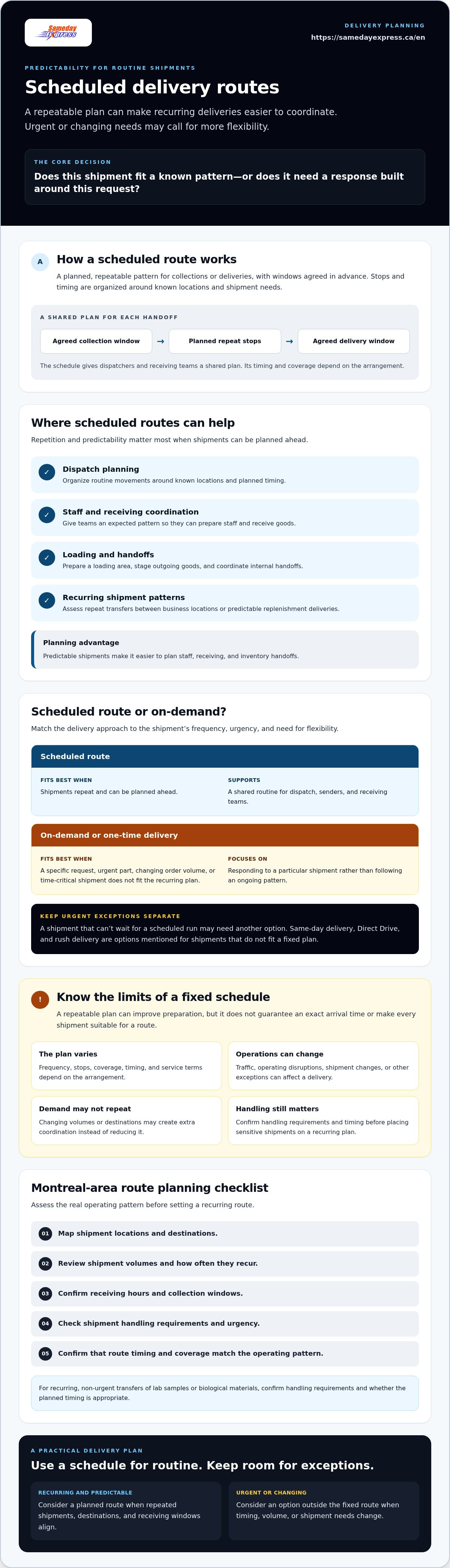
A scheduled delivery route follows a planned, repeatable pattern, with collection or delivery windows agreed in advance. Instead of arranging each stop separately, a business can organize recurring movements around known locations and shipment needs. The schedule gives dispatchers and receiving teams a shared plan, but its timing and coverage depend on the arrangement. It isn’t automatically the right fit for a shipment that needs immediate attention.
Route planning involves balancing stops, timing, and destinations. The Vehicle Routing Problem describes the complexity behind organizing vehicle routes efficiently. Understanding that challenge helps businesses see why a repeatable plan can be useful, while still requiring a close fit with real shipment needs.
For a concise overview of route optimization, watch this video:
How Is a Scheduled Route Different from a One-Time Delivery?
A recurring route is built around repeated stops and planned timing. A one-time delivery is arranged for a specific shipment or need, without assuming the same collection or destination will recur. Same-day delivery and on-demand dispatch focus on responding to a particular request, rather than following an ongoing pattern.
Known shipment days and receiving windows can help a business schedule staff, prepare a loading area, and coordinate handoffs. There’s no universal schedule: frequency, stops, coverage, and service terms vary. Confirm that the proposed plan matches your actual operating hours and shipment pattern.
Which Business Shipments May Fit a Recurring Schedule?
Look for shipments that repeat between business locations, suppliers, or customers and can be planned ahead. For example, a company might assess regular inter-office transfers or predictable replenishment deliveries. A healthcare organization could review recurring, non-urgent transfers only after confirming the shipment’s handling requirements and whether the planned timing is appropriate.
- 🚚 Routine business deliveries: Check whether repeat transfers or replenishment shipments can follow a stable pattern.
- 🧪 Sensitive shipments: Confirm handling requirements and timing before considering any recurring plan for lab samples or biological materials.
- ✈️ Urgent exceptions: Keep time-critical shipments separate if they can’t wait for a scheduled run.
The benefits of scheduled delivery routes matter most when repetition and predictability are more important than immediate dispatch. Before assigning a shipment to a route, consider its urgency, handling needs, and destination. A schedule organizes routine activity; it doesn’t make every shipment suitable for a fixed route.
The Main Benefits of Scheduled Delivery Routes for Business Operations
A repeatable delivery pattern gives teams a clearer operating rhythm. Dispatch can plan routine movements ahead, while senders and receiving locations know when to prepare shipments and staff. The value isn’t only the route itself. It’s also the shared expectation that helps each handoff fit into the workday.
These benefits depend on fit. Shipment demand needs to be consistent enough to plan around, destinations must work with the route, and agreed delivery windows need to suit receiving hours. If volumes, locations, or deadlines change often, a fixed pattern may create extra coordination rather than reduce it.
Can Scheduled Routes Improve Delivery Predictability?
Knowing the expected collection and delivery pattern in advance can help teams prepare. A warehouse can stage outgoing goods, a receiving team can assign staff to accept them, and another department can plan an internal handoff. For example, a business moving supplies between locations on a repeat basis can align order preparation with the expected collection window.
Predictable shipments make it easier to plan staff, receiving, and inventory handoffs. That predictability supports planning, but it isn’t a guarantee of an exact arrival time. Traffic, operating disruptions, shipment changes, or other exceptions can affect a delivery. Build a process for communicating changes and handling shipments that can’t follow the routine.
How Can Recurring Routes Support Day-to-Day Coordination?
When routine shipments follow an agreed pattern, teams may not need to arrange every movement from scratch. Dispatch can work from a recurring plan, while senders and receiving staff share clear expectations about preparation, collection, and handoff. This can simplify communication and help prevent routine tasks from competing for attention with unexpected requests.
To make the arrangement practical, document the details that matter to each team:
- Shipment readiness: Who prepares and releases each shipment?
- Receiving: Who accepts it, and during which agreed window?
- Exceptions: How will teams flag a missed handoff, changed volume, or urgent request?
Review the pattern when business needs shift. A route that once matched regular demand may no longer work if shipment frequency, destinations, or receiving hours change. The benefits of scheduled delivery routes come from a dependable fit between the plan and day-to-day operations, not from making every shipment follow the same process.
For deliveries that fall outside a routine plan, review Sameday Express Inc. courier options to see whether an available service suits the shipment’s timing needs.
Scheduled Routes vs. On-Demand Delivery: Which Fits Your Shipment?
The right choice depends on whether your shipment can follow a plan or needs action outside it. A recurring route may suit regular movements between known locations. On-demand delivery is worth assessing when timing is critical, a request is unexpected, or the shipment can’t wait for a scheduled run. Neither model fits every shipment.
| Factor | Scheduled route | On-demand delivery |
|---|---|---|
| Predictability | Planned collection or delivery windows support advance coordination. | Arranged for a specific request; confirm timing with the provider. |
| Flexibility | Works best when stops and receiving windows remain compatible. | May suit changing or exceptional shipment needs. |
| Urgency | Better for routine shipments that can follow the agreed plan. | Consider when a shipment is time-critical or can’t wait for the next route. |
| Repeat frequency | Designed around a recurring shipment pattern. | Suited to individual requests rather than a repeated pattern. |
When Is a Scheduled Route the Better Operational Fit?
Assess a recurring pattern when shipment frequency is stable, destinations repeat, and receiving windows can be planned. Routine replenishment or regular transfers may be easier to coordinate if teams can prepare shipments and receiving staff in advance. Reassess the fit if volumes rise and fall, destinations change, or the agreed timing no longer works. The benefits of scheduled delivery routes depend on that operational fit.
When Should a Business Choose On-Demand or Direct Drive?
Consider on-demand service when a shipment has a firm time requirement, arises unexpectedly, or can’t wait for a planned collection. The absence of a suitable daily lane, or the need to avoid waiting for the next scheduled movement, can make an on-demand option relevant. Sameday Express lists same-day delivery, rush delivery, and Sameday Direct Drive. Confirm the service’s availability, timing, coverage, and operating details for your shipment before booking.
Direct Drive is a named service, but its specific operating arrangements should be confirmed with the provider rather than assumed. For help assessing urgent delivery requirements, see this same-day delivery guide.
Use the shipment’s deadline, origin, destination, and handling needs to make the decision. A scheduled plan may support routine activity; an on-demand request may be more appropriate for an exception. Verify current availability and coverage with the provider before relying on either approach.
How to Assess a Scheduled Route Plan for Montreal-Area Shipments
A route plan is only useful if it reflects how your business actually sends and receives goods. Start with a clear picture of the movement: where shipments originate, where they need to go, how often they move, and when each location can receive them. For Montreal-area operations, that could mean mapping movements between a Dorval facility, a business location in the city, and a supplier or customer elsewhere in the region. These are planning examples, not confirmation of a provider’s route or coverage.
The benefits of scheduled delivery routes depend on the details behind the schedule. Share actual shipment patterns with a provider, then confirm whether the proposed timing, stops, handling, and service availability fit.
What Information Should You Gather Before Reviewing a Route?
Use shipment records to distinguish stable demand from occasional exceptions. Note typical frequency and size, recurring origins and destinations, and the receiving windows each location can support. Flag any handling requirements before discussing a plan.
- Routine movements: Record repeat shipments between your business locations, suppliers, or customers.
- Special handling: Identify sensitive items, such as lab samples or biological materials, and the handling requirements the provider must confirm.
- Urgent exceptions: Separate time-critical requests from shipments that can follow a planned pattern.
This separation helps prevent an assumed routine from obscuring the needs of a shipment that requires a different service approach. For guidance on sensitive or time-critical shipments, consult this specialized transportation guide.
What Should You Ask a Delivery Provider?
Bring your shipment map to the discussion and ask direct questions. Confirm which locations and service types are available for your actual requirements, rather than assuming a route covers every Montreal-area stop or onward destination. Ask how proposed collection and delivery windows align with your receiving hours, and what happens if a pickup or handoff is missed.
- How are urgent exceptions handled if they cannot wait for the planned movement?
- Is suivi par GPS available for this service, and what delivery updates can your team expect?
- How are handoffs documented, and can the provider confirm proof of delivery?
- What handling procedures can be confirmed for sensitive shipments?
Get clear answers before relying on tracking, updates, proof of delivery, or specialized handling. Confirm service availability, timing, and coverage for each origin and destination. If you’re assessing an urgent shipment as part of your plan, review Sameday Express delivery options and confirm which service fits your requirements.
How Sameday Express Can Support Shipments That Do Not Fit a Fixed Route
Scheduled routes can help organize repeat movements, but urgent or changing shipments may need a different approach. Sameday Express Inc. is a B2B courier and logistics provider, not a confirmed scheduled-route operator. Its listed services include same-day delivery, Sameday Direct Drive, and rush delivery. The benefits of scheduled delivery routes don’t remove the need for a separate plan when a shipment can’t wait or its requirements change.
Which Sameday Express Services May Suit Time-Critical Shipments?
Same-day delivery is intended for shipments that need delivery on the day they’re collected. Direct Drive and rush delivery are also listed services, but the right fit depends on the shipment and current service availability. Confirm the specific arrangements, timing, and coverage with Sameday Express before booking. Don’t assume a particular delivery window or operating detail without checking.
For healthcare, laboratory, or pharmaceutical shipments, ask about medical courier capabilities and explain the contents and handling requirements. Confirm directly whether the required handling can be supported for your shipment. Sensitive contents should be clearly identified before dispatch review, not treated as a routine parcel by default.
What Should You Include in a Delivery Request?
Give the provider enough information to assess the shipment and recommend an appropriate service. Share:
- Collection and destination: Provide complete pickup and delivery locations, including any relevant access details.
- Shipment details: State the contents, dimensions, and any special handling requirements.
- Timing: Explain when the shipment will be ready and when it must arrive.
- Receiving contact: Include the recipient’s name and contact details for delivery coordination.
- Urgency and exceptions: Flag time-critical needs, sensitive contents, or changes to the original request.
Clear details help the provider review availability and suitability before dispatch. For urgent or sensitive shipments, use the specialized transportation guide as a planning reference, then confirm the service requirements directly.
Review commercial delivery services and contact Sameday Express with your shipment type, origin, destination, deadline, and handling needs. Ask which listed option fits, and confirm availability before relying on a delivery plan.
Build a Delivery Plan That Fits Your Business
Scheduled routes can give recurring shipments a more predictable structure, helping teams plan dispatch, receiving, and handoffs. The benefits of scheduled delivery routes depend on a practical match between shipment frequency, destinations, handling needs, and receiving windows. For urgent or changing shipments, on-demand options may be a better fit than waiting for a recurring route.
Sameday Express offers same-day, Direct Drive, rush, and specialized medical courier services for businesses with delivery needs that may fall outside a fixed plan. The company offers 24/7 availability for urgent delivery requests, with advance notice. Confirm current availability, timing, and suitability for your shipment directly with the team. For businesses looking beyond courier movements, warehousing and pick-and-pack fulfillment are also available as logistics services.
Ready to review your options? Review our business delivery services and contact our team with your shipment details. A clear plan for routine deliveries and time-critical exceptions can help your business coordinate each movement with greater confidence.
Frequently Asked Questions
What are the main benefits of scheduled delivery routes?
The main benefits of scheduled delivery routes are more predictable planning and clearer coordination for repeat shipments. Agreed collection and delivery windows can help dispatch teams prepare movements and help receiving staff plan coverage and handoffs. A recurring pattern may also reduce the need to arrange each routine shipment separately. These advantages depend on steady shipment demand, workable destinations, and timing that fits both the sender and recipient.
How do scheduled delivery routes work for businesses?
A scheduled route follows a planned, repeatable pattern with agreed collection or delivery windows. A business and provider review shipment origins, destinations, frequency, receiving hours, and handling needs, then determine whether a recurring arrangement is suitable. The schedule organizes routine delivery activity, but the terms and frequency can vary. Businesses should confirm how changes, missed handoffs, and shipments outside the plan will be handled.
Are scheduled delivery routes more reliable than on-demand delivery?
Neither option is automatically more reliable. A scheduled route can make expected timing easier to plan around for recurring shipments, while on-demand delivery may better suit a specific or urgent request. A schedule doesn’t remove delays or exceptions, and an on-demand request still depends on confirmed availability, timing, and coverage. Compare each option against the shipment’s deadline, route, receiving window, and handling requirements before deciding.
Can scheduled routes handle urgent or same-day shipments?
A scheduled route may not suit a shipment that can’t wait for its next planned collection or delivery window. For urgent or same-day needs, contact a provider to confirm available options and timing for the specific shipment. Sameday Express lists same-day delivery and rush delivery among its services. Confirm current availability and suitability directly, especially if the shipment has a firm deadline or special handling needs.
When should a business choose Direct Drive instead of a scheduled route?
Consider asking about Direct Drive when a shipment is time-critical, doesn’t fit a recurring pattern, or needs a separate service review rather than waiting for a planned route. Sameday Express lists Sameday Direct Drive as a service, but the right option depends on the shipment and current availability. Confirm the service’s operating details, timing, and coverage with the provider before making a decision.
How can a Montreal business decide whether a recurring delivery route is suitable?
A Montreal business can assess suitability by mapping shipment origins and destinations, repeat frequency, typical shipment size, receiving hours, and handling requirements. Check whether locations and windows remain consistent enough to plan around, and separate routine movements from urgent exceptions. Ask a provider to confirm coverage and service availability for each actual location. If shipment volumes or destinations change often, review the arrangement regularly rather than assuming it will continue to fit.
What information should I give a courier when arranging a time-critical delivery?
Give the courier the collection address, destination, shipment contents and dimensions, ready time, required delivery deadline, and receiving contact information. Clearly flag sensitive contents, special handling requirements, and any access or handoff instructions. Ask which service is available for the route and deadline, and confirm timing before relying on it. Sameday Express states that urgent delivery requests are available 24/7; confirm current availability for your shipment directly.
Disclaimer
Blog Disclaimer
The information published on the Sameday Express Blog is provided for general informational and educational purposes only. While we strive to keep all content accurate and up to date, Sameday Express makes no representations or warranties of any kind, express or implied, regarding the completeness, accuracy, reliability, suitability, or availability of the information contained in our articles.
The content on this blog does not constitute legal, customs, tax, regulatory, financial, or professional advice. Shipping regulations, carrier policies, customs requirements, and transportation laws may change without notice and may vary by destination. Readers should verify current requirements with the appropriate government authorities, carriers, or qualified professionals before making shipping or business decisions.
Sameday Express is not liable for any loss, damage, delays, or consequences arising from the use of, or reliance on, information published on this website. Any actions taken based on the information provided are at the reader's own risk.
References to third-party companies, products, services, or websites are provided for informational purposes only and do not constitute an endorsement or recommendation by Sameday Express.
All blog content, including text, graphics, images, and logos, is the property of Sameday Express unless otherwise stated and may not be reproduced or distributed without prior written permission.
For specific shipping requirements, pricing, transit times, or logistics solutions, please contact Sameday Express directly for personalized assistance.


