

What if your urgent shipment is moving on schedule, but no one can clearly account for who handled it at each handoff? GPS tracking can show a vehicle’s location. A secure chain of custody protocol also needs to establish responsibility and document the transfer of control.
For healthcare, laboratory and other time-critical shipments, unclear handoffs can raise concerns about delays, loss, tampering or mishandling. You need a process that makes each person’s role clear and gives your team a reliable record of how sensitive materials were handled. The safeguards should match the shipment’s needs without adding unnecessary friction.
This guide explains how to assign custody responsibilities, plan accountable handoffs and choose practical protections for an urgent shipment. At Sameday Express Inc., our trained drivers handle sensitive materials, and our vehicles are tracked by GPS. Learn how these measures support secure transport, and why location visibility is only one part of a dependable chain of custody.
Key Takeaways
- Set clear custody roles and handling expectations so each person knows when responsibility changes hands.
- Use a secure chain of custody protocol to guide a shipment from preparation and pickup through delivery and record closure.
- Distinguish what GPS tracking shows, a vehicle’s location, from what custody information can establish about handling and control.
- Build a practical checklist for identifying shipments, recording handoffs and responding to exceptions.
- See how trained drivers, GPS-tracked vehicles and Direct Drive can support secure transport with fewer transfers.
What Is a Secure Chain of Custody Protocol for Shipments?
A chain of custody records who is responsible for a shipment and has control of it, from collection through receipt. A secure chain of custody protocol defines how the item must be handled, protected and transferred, and what to do if a delay, discrepancy or other exception occurs. It gives everyone involved a clear reference point instead of leaving responsibility to assumptions.
The concept applies wherever an item’s history and handling matter. The general Chain of custody framework is used in settings such as evidence management and supply chains. In transport, the focus is on the shipment: who accepted control, when responsibility changed and whether the agreed handling expectations were followed.
What Does Chain of Custody Mean During Transport?
Think of a shipment’s journey as a sequence of accountable people, locations and transfers. The chain begins when the item is collected and continues through each handoff until the recipient takes receipt. A clear process helps the sender trace responsibility at every stage and identify where an issue may have arisen.
Vehicle tracking answers a different question. It can show where a GPS-tracked vehicle travelled, but its location alone doesn’t establish who had physical control of a particular package. Custody is about responsibility for the item. Route visibility supports the record, but it doesn’t prove every handoff.
Which Shipments Need More Deliberate Custody Controls?
Consider lab samples and biological materials, where following handling instructions can be central to the shipment’s intended use. Pharmaceuticals and medical devices may also call for defined responsibilities and safeguards. Confidential business materials can require careful control too, particularly when access or disclosure would create risk.
The right level of control depends on the shipment’s sensitivity and any requirements that apply to it. Before pickup, the protocol should make expectations clear: who is responsible, which handling instructions apply and how exceptions should be escalated. Don’t assume every item needs identical safeguards.
For sensitive medical shipments, trained drivers can support careful handling and accountability in transit. Sameday Express Inc. provides specialized medical courier services for lab samples, biological materials, medical devices and pharmaceutical products. Our vehicles are tracked by GPS, adding route visibility while custody responsibilities remain focused on the shipment itself.
How a Secure Chain of Custody Protocol Works From Pickup to Delivery
A dependable process makes each stage clear before an urgent shipment is on the move. A secure chain of custody protocol should identify the shipment, define who is responsible next and explain how to handle changes or delays. Every transfer needs clear accountability, so responsibility never becomes uncertain between collection and receipt.
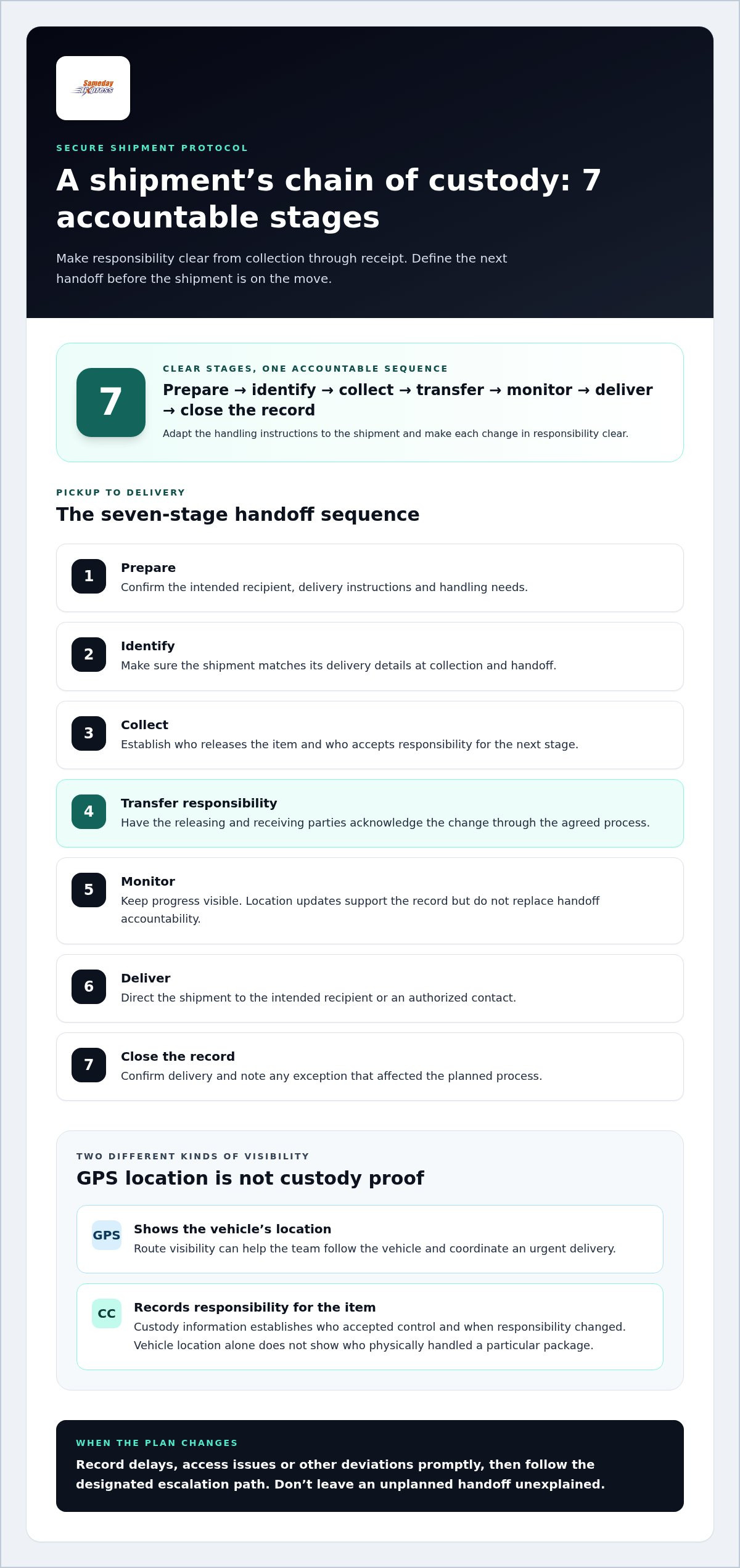
Use this sequence as a practical framework, then adapt the handling instructions to the shipment:
- Prepare: Confirm the intended recipient, delivery instructions and handling needs.
- Identify: Make sure the shipment can be matched to its delivery details at collection and handoff.
- Collect: Establish who releases the item and who accepts responsibility for the next stage.
- Transfer: Have the releasing and receiving parties acknowledge the change in responsibility through the agreed process.
- Monitor: Keep the shipment’s progress visible, while recognizing that location updates don’t replace handoff accountability.
- Deliver: Direct the shipment to the intended recipient or an authorized contact.
- Close the record: Confirm delivery and note any exception that affected the planned process.
What Should Be Established Before Pickup?
Start with the information needed to move the right item to the right person: shipment identity, intended recipient, delivery instructions and handling requirements. Assign responsibility for collection and identify the next transfer before the courier departs. This reduces last-minute uncertainty, especially for a time-critical shipment.
For lab samples, biological materials and other healthcare shipments, align handling instructions with applicable healthcare requirements. Pharmaceutical shipments may also cross regulatory boundaries. The U.S. FDA’s Drug Supply Chain Security Act (DSCSA) is a U.S. example concerning prescription-drug supply-chain security. It shouldn’t be treated as a statement of Canadian requirements.
What Should Happen at Each Handoff and Delivery?
At a transfer, the person releasing the shipment and the person receiving it should acknowledge the change of responsibility using the process agreed for that delivery. This clarifies who has control at each point, even if the route or delivery plan changes.
If access is delayed, the recipient is unavailable or another deviation occurs, record what happened promptly and follow the designated escalation path. Don’t leave an exception to memory or let an unplanned handoff go unexplained. At the destination, document delivery to the intended recipient or an authorized contact, then close the sequence.
For a time-critical shipment, time-critical courier services can support a planned pickup-to-delivery process with defined handling responsibilities.
GPS Tracking vs. Chain of Custody: What Each One Proves
GPS visibility helps a shipment team follow a vehicle’s location and coordinate an urgent delivery. It doesn’t show who physically handled a particular item, whether its condition changed or whether it reached the intended recipient. A secure chain of custody protocol pairs location visibility with clear, shipment-level accountability.
| Measure | What it can help establish |
|---|---|
| GPS tracking | A tracked vehicle’s location and route progress. |
| Custody process | Who accepted responsibility for a shipment and when control changed hands. |
| Delivery confirmation | Whether delivery to the intended recipient or an authorized contact was acknowledged. |
What Can GPS Tracking Tell a Shipment Team?
Knowing a vehicle’s location can help teams monitor route progress and coordinate an urgent delivery. If the vehicle is delayed, that visibility can inform follow-up and help the sender understand the shipment’s status. Sameday Express Inc. uses GPS-tracked vehicles to support shipment visibility.
A vehicle’s location isn’t the same as a shipment status update or custody record. GPS data alone doesn’t identify the person holding a specific item, confirm its condition or establish every transfer. Treat it as one useful view of the journey, not proof of everything that happened to the shipment.
What Evidence Supports Accountability at a Handoff?
Accountability starts with identifying the sender and receiver at a transfer and having both sides acknowledge the change in responsibility through the agreed process. The record should make it possible to understand who released the item, who accepted it and when the transfer occurred.
There isn’t one universal record format for every shipment. The sender and courier can define a practical shipment-specific process, while any required evidence should match the item and applicable requirements. Keep status updates separate from handoff acknowledgements: one reports progress, the other clarifies responsibility.
For sensitive shipments, combining GPS visibility with clear transfer accountability gives teams a more useful picture than either measure alone. GPS helps show where the vehicle is. A custody process helps explain who has control of the shipment as it moves toward delivery.
How to Build a Practical Chain of Custody Protocol
A useful protocol should be clear enough to follow under time pressure. Define a consistent process for every shipment, then add handling or compliance instructions specific to the material and destination. Keep instructions accessible to everyone involved, with responsibilities and escalation steps easy to find during an urgent, on-demand movement.
Which Protocol Elements Should a Business Define?
Assign responsibility for preparing, releasing, transporting and receiving each shipment. Make sure everyone involved knows when their role begins and ends. A concise checklist can help teams put the process into practice:
- Ownership: Name the person or role responsible at each stage, including the next handoff.
- Identification: Define how staff will match the shipment to its recipient and delivery instructions.
- Handoffs: Set out how the releasing and receiving parties acknowledge a transfer.
- Exceptions: Explain how to report delays, damage, access problems or other deviations, and who should be notified.
- Receipt: State how delivery to the intended recipient or an authorized contact is acknowledged and the shipment process closed.
These are planning principles, not a prescribed form. Choose a practical way to capture the information, provided the process is clear and consistent for the people using it.
How Should Teams Adapt Controls to Sensitive Materials?
Start with the item, destination and applicable requirements. General steps such as assigning custody and identifying a recipient apply broadly. Handling directions may differ for lab samples, biological materials, pharmaceuticals or other sensitive shipments. Don’t assume one set of instructions suits every item.
For temperature-sensitive items, follow verified, shipment-specific handling instructions. Avoid unsupported steps and informal assumptions. Train each person involved on their responsibilities and the escalation path, so they know what to do if the planned movement can’t proceed as expected.
Keep the protocol brief enough to use during a time-critical pickup. Put essential details in a consistent, accessible place, use direct language and make exception reporting straightforward. For a broader look at planning critical shipments, see Transport Spécialisé : Le Guide Complet Pour les Envois Critiques.
For a time-critical delivery, arrange a time-critical shipment with clear handling and handoff expectations.
How a Specialized Courier Supports Secure, Time-Critical Shipments
A clear protocol sets expectations. A specialized courier helps put them into practice during transport. For urgent commercial shipments, trained drivers, GPS-tracked vehicles and a service suited to the route can support accountable handling and visibility. These measures work alongside your shipment instructions. They don’t replace clear roles, handoffs or recipient details.
Consider the shipment’s sensitivity, destination and urgency when choosing a transport approach. A lab sample may have different handling needs from a medical device, and the plan should make those needs clear before collection. Sameday Express Inc. provides commercial logistics services, including specialized medical courier services for sensitive materials.
When Does Direct Drive Suit a Sensitive Shipment?
Direct Drive can suit a shipment when minimising transfers is a priority. Fewer handoffs mean fewer points where responsibility must change, making the transport plan simpler to follow. This may matter for lab samples, medical devices or other time-sensitive materials. The right approach still depends on the shipment’s handling instructions and delivery requirements.
Direct transport is one way to reduce transfer points, not a substitute for defining custody. The sender and recipient still need clear instructions for collection, responsibility and receipt. Sameday Express Inc. offers Direct Drive for time-critical shipments when a direct movement fits the plan.
What Can Sameday Express Inc. Bring to the Shipment Plan?
Our drivers are trained to handle sensitive materials and maintain appropriate chain of custody. GPS-tracked vehicles add visibility into the vehicle’s location during transport, helping business teams follow progress. GPS doesn’t identify who handled a specific shipment or prove every handoff, so pair visibility with the agreed shipment-level process.
For medical courier needs, Sameday Express Inc. transports laboratory samples, medical devices and pharmaceutical products. Share the shipment’s relevant handling and delivery instructions so responsibilities are clear throughout the journey. For more guidance on planning urgent business deliveries, read Livraison le jour même : Le guide complet pour les entreprises.
- Set out who releases and receives the shipment.
- Make handling instructions clear before pickup.
- Use GPS visibility to support, not replace, custody accountability.
Plan your next time-critical shipment with a clear custody process and Sameday Express Inc. courier services.
Put Clear Custody Plans Into Action
A reliable shipment plan starts with clear responsibility at collection, at every transfer and at delivery. A secure chain of custody protocol clarifies who controls the item and how handoffs are acknowledged. GPS tracking adds visibility into a vehicle’s location, but it doesn’t replace shipment-level accountability.
For sensitive, time-critical materials, trained drivers and a suitable transport plan can support careful handling. Sameday Express Inc. brings over 25 years of experience, drivers trained to handle sensitive materials and maintain appropriate chain of custody, GPS-tracked vehicles, and specialized medical courier services.
Have an urgent shipment to plan? Discuss a time-critical shipment with our logistics team. Set clear instructions and arrange your shipment with Sameday Express Inc.
Frequently Asked Questions
Is GPS tracking enough to establish a secure chain of custody?
No. GPS tracking can show a vehicle’s location, but it can’t establish who handled a specific item or when responsibility changed. A secure chain of custody protocol also needs shipment identification, accountable handoffs and suitable records to help the business trace responsibility from collection through receipt. GPS supports route visibility, but it doesn’t replace shipment-level custody. The process and records should fit the shipment rather than assume every delivery needs the same documentation.
What should a chain of custody form include?
A custody record commonly identifies the shipment, the relevant parties, transfer points and any exceptions. The exact information and record format depend on the shipment and applicable requirements, so there isn’t one form or field list for every delivery. Aim for clear, legible information that helps your team trace responsibility from collection through receipt. The process should make it easy to understand who had control at each stage.
How do you maintain chain of custody during transport?
Define handling instructions before dispatch, identify the shipment, assign responsibility and agree how each handoff will be acknowledged. Record exceptions through delivery, then confirm receipt by the intended recipient or an authorized contact. Follow the protocol set for that shipment and any applicable requirements. Repeatable steps help prevent confusion, but handling details should reflect the material and its needs rather than assume one process fits every item.
What happens if a custody handoff is missed or undocumented?
An unclear or undocumented transfer can make it harder to establish who was responsible and follow up on the shipment’s progress. It doesn’t automatically prove the item was lost, contaminated or subject to a regulatory breach. Record the known facts promptly, notify the appropriate shipment contacts and follow your organization’s escalation procedure. Timely follow-up helps identify what is known, what remains uncertain and what action is needed next.
Can a courier maintain chain of custody for lab samples?
Yes. A courier can support chain of custody through trained handling and clearly assigned transfer responsibilities. Sameday Express Inc. provides specialized medical courier services, and our drivers are trained to handle sensitive materials and maintain appropriate chain of custody. The shipment plan should communicate relevant handling instructions and define how responsibility changes from collection to receipt. Specific forms, seals or other controls depend on the shipment and applicable requirements.
How should temperature-sensitive materials be handled during courier transport?
Follow handling instructions that reflect the material’s requirements and applicable healthcare requirements. Define those instructions before dispatch, and make sure each person responsible for the shipment understands them and knows what to do if the planned handling can’t be followed. Requirements can vary by material, so don’t assume a particular temperature range, monitoring device or storage method applies. Use instructions established for the specific shipment.
Does chain of custody apply only to medical shipments?
No. Businesses may use custody procedures for confidential, high-value or otherwise sensitive items, as well as medical shipments. The purpose is to clarify who has responsibility and when control changes hands. The protocol should match the item’s nature, risk and applicable requirements. Medical shipments may also have specific handling expectations, so keep those shipment-specific needs distinct from the broader accountability steps that apply across industries.
Disclaimer
Blog Disclaimer
The information published on the Sameday Express Blog is provided for general informational and educational purposes only. While we strive to keep all content accurate and up to date, Sameday Express makes no representations or warranties of any kind, express or implied, regarding the completeness, accuracy, reliability, suitability, or availability of the information contained in our articles.
The content on this blog does not constitute legal, customs, tax, regulatory, financial, or professional advice. Shipping regulations, carrier policies, customs requirements, and transportation laws may change without notice and may vary by destination. Readers should verify current requirements with the appropriate government authorities, carriers, or qualified professionals before making shipping or business decisions.
Sameday Express is not liable for any loss, damage, delays, or consequences arising from the use of, or reliance on, information published on this website. Any actions taken based on the information provided are at the reader's own risk.
References to third-party companies, products, services, or websites are provided for informational purposes only and do not constitute an endorsement or recommendation by Sameday Express.
All blog content, including text, graphics, images, and logos, is the property of Sameday Express unless otherwise stated and may not be reproduced or distributed without prior written permission.
For specific shipping requirements, pricing, transit times, or logistics solutions, please contact Sameday Express directly for personalized assistance.


